Ningbo Rail Transit, also called the Ningbo Metro, is a rapid transit system serving Ningbo, Zhejiang, and nearby suburbs. It is the second metro system to open in Zhejiang Province after Hangzhou Metro. As of January 2026, the system has 8 operating lines, 200 stations, and a network length of 296 km (183.9 miles). It serves major urban districts including Haishu, Jiangbei, Zhenhai, Beilun, Yinzhou, and Fenghua. The first line opened on May 30, 2014, and the network has continued to grow through new routes and expansion projects.
| Key | Information |
|---|---|
| System | Ningbo Rail Transit / Ningbo Metro |
| Location | Ningbo, Zhejiang, China |
| Lines in operation | 8 |
| Stations | 200 |
| Network length | 296 km (183.9 miles) |
| First opening | May 30, 2014 |
| Airport link | Line 2 serves Lishe International Airport |
| Typical operating hours | First trains usually start between 5:55 AM and 6:00 AM; last train is generally around 10:30 PM to 11:00 PM |
| Fare range | Usually 2-8 RMB ($0.28-$1.11), with some materials noting a network maximum of 10 RMB ($1.39) |
Ningbo Rail Transit Map
Map of Ningbo Rail Transit showing different lines. Click on the map to enlarge it or download the Ningbo Rail Transit map in PDF format.
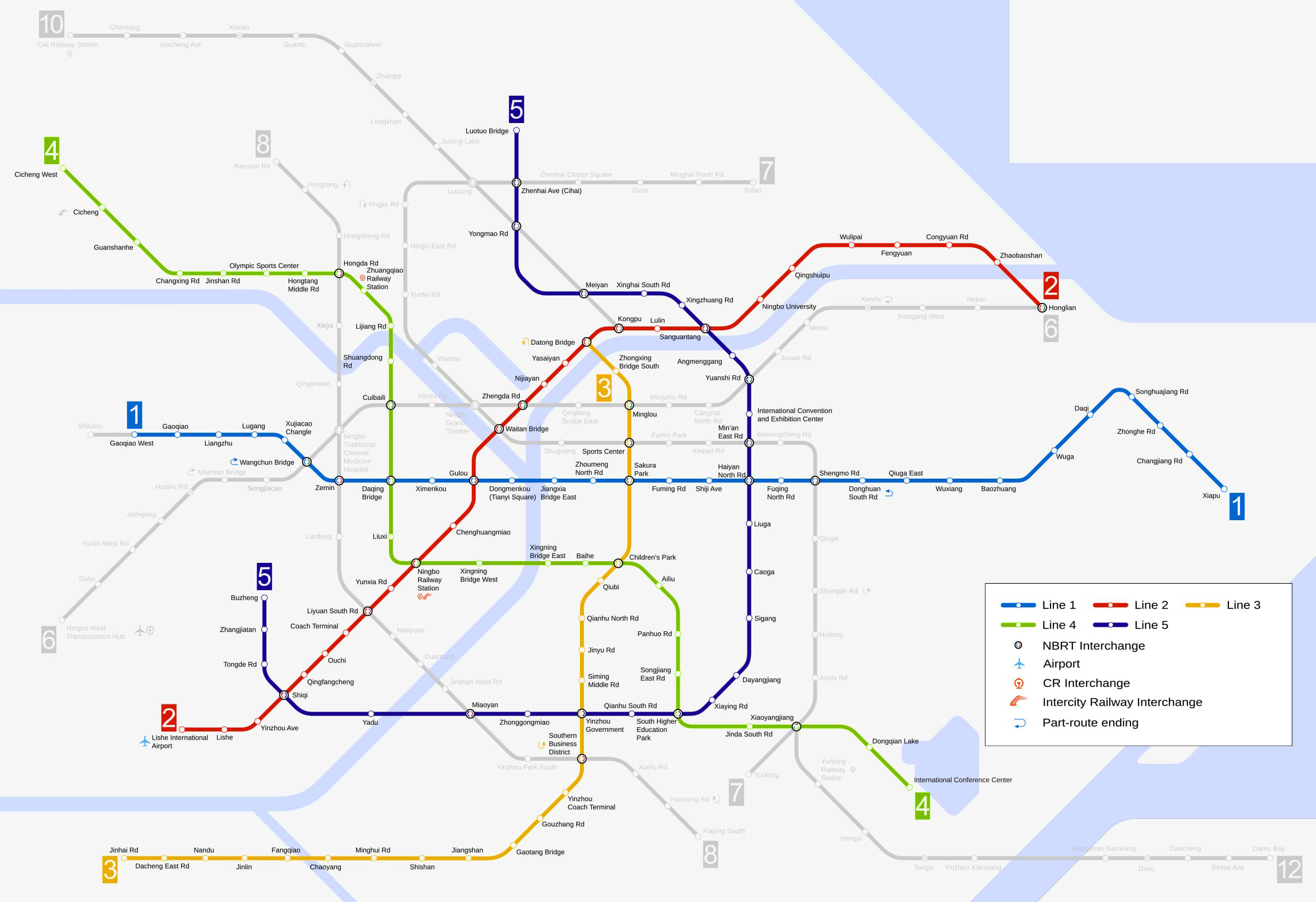
Ningbo Rail Transit Lines and Stations
As of January 2026, Ningbo Rail Transit has 8 metro lines in operation across the urban area. The system route network covers key parts of Ningbo and forms the backbone of city transport in several major districts.
Lines in operation
| Station | Details |
|---|---|
| Line 1 | Route: Gaoqiao West – Xiapu. Opened May 30, 2014. Newest extension: March 19, 2016. Length: 46.165 km (28.69 miles). Stations: 29. |
| Line 2 | Route: Lishe International Airport – Honglian. Opened September 26, 2015. Newest extension: December 1, 2022. Length: 36.95 km (22.96 miles). Stations: 27. |
| Line 3 | Route: Datong Bridge – Jinhai Road. Opened June 30, 2019. Newest extension: September 27, 2020. Length: 38.63 km (24.00 miles). Stations: 24. |
| Line 4 | Route: Cicheng West – International Conference Center. Opened December 23, 2020. Newest extension: May 16, 2025. Length: 39.73 km (24.69 miles). Stations: 27. |
| Line 5 | Route: Buzheng – Luotuo Bridge. Opened December 28, 2021. Newest extension: June 28, 2024. Length: 36.6 km (22.74 miles). Stations: 27. |
| Line 6 | Route: Gulin – Honglian. Opened January 16, 2026. Length: 39.6 km (24.61 miles). Stations: 23. |
| Line 7 | Route: Yunlong – Yufan. Opened August 29, 2025. Length: 39.4 km (24.48 miles). Stations: 25. |
| Line 8 | Route: Hansong Road – Kaiyuan Road. Opened June 30, 2025. Length: 21.8 km (13.55 miles). Stations: 18. |
| Total | Network length: 296 km (183.9 miles). Stations: 200. |
Line highlights
- Line 1 was the first line in the system and runs east-west from Gaoqiao in Haishu to Xiapu in Beilun.
- Line 2 connects Lishe International Airport with Honglian and is one of the most useful routes for airport and downtown travel.
- Line 3 links Datong Bridge with Jinhai Road and extends the network into Fenghua.
- Line 4 runs from Cicheng West to the International Conference Center and includes Ningbo Railway Station on its route.
- Line 5 operates between Buzheng and Luotuo Bridge, serving western and northern parts of the city.
Lines under construction and planning
The 2021-2026 Construction Plan of Ningbo Rail Transit was approved in December 2020. It includes the first phase of Lines 6, 7, and 8, plus extensions to Lines 1 and 4, adding 106.5 km (66.2 miles) of new rail. Longer-term planning also includes two regional express metro lines to Cixi and Xiangshan.
| Station | Details |
|---|---|
| Line 8 (Phase I, Xiaying South part) | Route: Xiaying South – Hansong Road. Length: 1.24 km (0.77 miles). Stations: 1. Status: Under Construction. Target: before 2026. |
| Line 1 west extension | Route: Gaoqiao West – Shilutou. Length: 1.5 km (0.93 miles). Stations: 1. Status: Approved. Target: before 2026. |
| Line 10 (Ningci Line) | Route: Kongpu – Cixi Railway Station. Length: 63.6 km (39.52 miles). Stations: 13. Status: Under Construction. Target: 2026. |
| Line 12 (Ningxiang Line) | Route: Xiaoyangjiang – Damu Bay. Length: 61.45 km (38.18 miles). Stations: 10. Status: Under Construction. Target: 2027. |
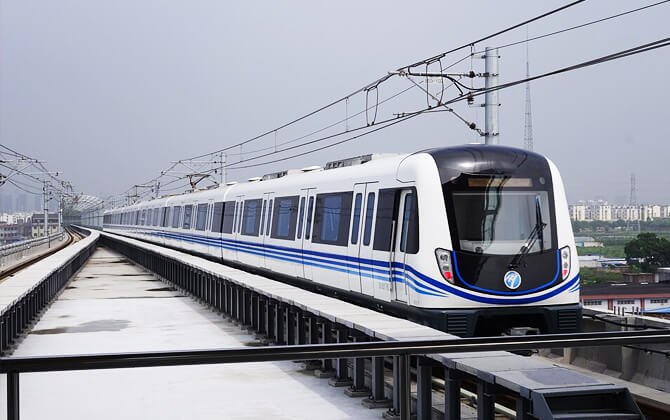
Ningbo Rail Transit Frequency
Ningbo Rail Transit frequency varies by line and time of day, but trains generally arrive every 7 to almost 9 minutes in regular service. During busy periods, some lines run more often. Late in the evening, service slows down a bit.
| Service detail | Timings |
|---|---|
| Regular frequency | About every 7 to almost 9 minutes |
| Lines 1 and 2 peak frequency | Every 4-5 minutes |
| Lines 1 and 2 off-peak frequency | Every 6-8 minutes |
| Lines 3, 4, and 5 peak frequency | Every 6-8 minutes |
| Lines 3, 4, and 5 off-peak frequency | Every 8-10 minutes |
| After 9:00 PM | Every 10-12 minutes |
| Starting time | Usually between 5:55 AM and 6:00 AM |
| Last train / closing time | Usually about 10:30 PM to 11:00 PM |
If you need the timetable, schedule today, or timings today for a specific route, it is best to check station displays before travel. That matters most if you are riding close to the last train or planning a late-night airport trip.
Prices, tickets and discounts
Ningbo Rail Transit uses a distance-based fare system. Transfers between lines do not require an extra payment, and the shortest route is used for fare calculation. Available materials say the maximum fare across the network is no higher than 10 RMB ($1.39), while the detailed fare table provided shows a maximum ticket price of 8 RMB ($1.11).
Some fares dropped after new transfer stations opened. For example, a trip from Gaoqiao West to Yinzhou Avenue fell from 6 RMB ($0.83) to 5 RMB ($0.69), while Southern Business District to Ningbo Railway Station dropped from 5 RMB ($0.69) to 4 RMB ($0.56).
- One-way ticket: sold at station vending machines or online iTVM, valid only on the day of purchase
- One-day ticket and three-day ticket: useful for frequent travel
- Ningbo Public Transportation Card
- Ningbo Citizen Card (PBOC3.0)
| Service detail | Timings |
|---|---|
| 0-4 km (0-2.5 miles) | 2 RMB ($0.28) |
| 4-8 km (2.5-5.0 miles) | 3 RMB ($0.42) |
| 8-13 km (5.0-8.1 miles) | 4 RMB ($0.56) |
| 13-20 km (8.1-12.4 miles) | 5 RMB ($0.69) |
| Each additional 9 km (5.6 miles) | +1 RMB (+$0.14) |
| Maximum fare shown in fare table | 8 RMB ($1.11) |
Cards and passes can reduce the cost of travel. The materials mention a 5% discount for the Yongcheng Transport Card, and another Ningbo Transport Card is noted as offering about a 10% fare discount. If you plan several rides in one day, a day pass may be worth considering.
Fare information, ticket price details, and current pass rules are posted near vending machines, so checking the latest station notice is a smart move. There is no fare calculator in the source material, but the distance bands make the price structure fairly clear.
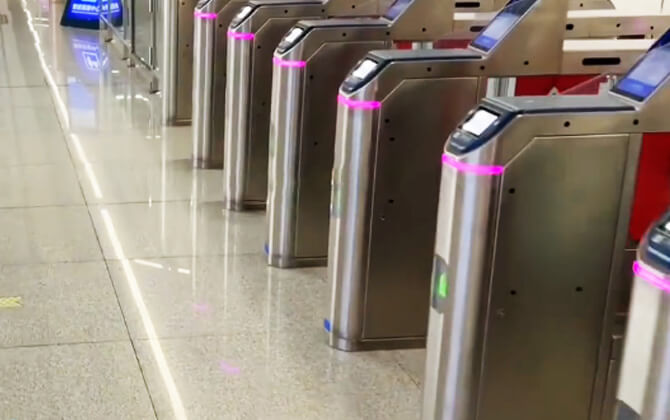
Connections to Other Systems
Ningbo Rail Transit is a key part of public transport and local transport in the city. The network links major districts and helps passengers move between urban areas, suburban zones, and important transport hubs.
Several lines create useful transfers inside the metro system. Line 1 runs from Gaoqiao West to Xiapu, Line 2 links Lishe International Airport with Honglian, Line 3 connects Datong Bridge with Jinhai Road, Line 4 runs between Cicheng West and the International Conference Center, and Line 5 operates between Buzheng and Luotuo Bridge.
The system is also growing through approved and under-construction projects. Recent expansion includes Line 8 opening in 2025 and Lines 6 and 7 entering service by early 2026. Planning also continues for regional express links to Cixi and Xiangshan, which would strengthen transportation in and around Ningbo.
Ningbo Railway Station is one of the most important interchange points. It is served by Line 2 and Line 4 and allows transfers to intercity rail without leaving the station. That makes it a practical link between metro travel and longer-distance transport.
Airport Connections
Ningbo Lishe International Airport is directly connected to the city by Ningbo Rail Transit Line 2. The metro station is Lishe International Airport, and this route is the most direct rail link between the airport and central Ningbo.
For many travelers, Line 2 is the best public transport option. It connects the airport with key stops such as Ningbo Railway Station, Gulou, and City God Temple. According to the available information, the running time from the airport to downtown is about 20 minutes, and the fare is 6 RMB ($0.83).
To reach the station, follow signs in the terminal to the Ground Traffic Center and B2 level. The metro entrance is near Terminal 2.
| Station | Details |
|---|---|
| Metro Line 2 | Cost: 6 RMB ($0.83). Time: 20 minutes. Direct airport route to downtown. |
| Taxi | Cost: 45-55 RMB ($6.25-$7.64). Time: 25 minutes. Handy if you have luggage or arrive late. |
| Airport Bus Line 1 | Cost: 12 RMB ($1.67). Time: 25 minutes. Serves Ningbo Railway Station. |
If you are traveling close to the closing time, check the schedule and last train in advance. It can save you from an unexpected taxi ride.
History
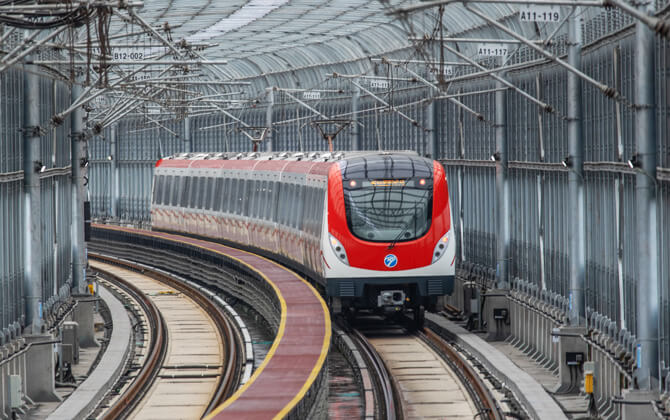
Ningbo Rail Transit is the second rapid transit system to open in Zhejiang Province after Hangzhou Metro. Construction of the first phase of Line 1 began in June 2009, and the line opened to the public on May 30, 2014. That marked the start of the modern metro system in Ningbo.
Line 2 followed on September 26, 2015. The network then expanded steadily with Line 3 in 2019, Line 4 in 2020, and Line 5 in 2021. Line 2 was later extended to Honglian on December 1, 2022, and Line 4 added more service in 2025.
In December 2020, the 2021-2026 Construction Plan of Ningbo Rail Transit was approved. It included the first phases of Lines 6, 7, and 8, along with extensions to Lines 1 and 4. Planning documents also mentioned regional express metro lines to Cixi and Xiangshan.
| Station | Details |
|---|---|
| Line 1 | Opening: May 30, 2014. Newest extension: March 19, 2016. Length: 46.165 km (28.69 miles). Stations: 29. |
| Line 2 | Opening: September 26, 2015. Newest extension: December 1, 2022. Length: 36.95 km (22.96 miles). Stations: 27. |
| Line 3 | Opening: June 30, 2019. Newest extension: September 27, 2020. Length: 38.63 km (24.00 miles). Stations: 24. |
| Line 4 | Opening: December 23, 2020. Newest extension: May 16, 2025. Length: 39.73 km (24.69 miles). Stations: 27. |
| Line 5 | Opening: December 28, 2021. Newest extension: June 28, 2024. Length: 36.6 km (22.74 miles). Stations: 27. |
| Line 6 | Opening: January 16, 2026. Length: 39.6 km (24.61 miles). Stations: 23. |
| Line 7 | Opening: August 29, 2025. Length: 39.4 km (24.48 miles). Stations: 25. |
| Line 8 | Opening: June 30, 2025. Length: 21.8 km (13.55 miles). Stations: 18. |
| Total | Network length: 296 km (183.9 miles). Stations: 200. |
Future Extensions
As of January 2026, Ningbo Rail Transit continues to grow through approved extensions and new lines. The construction plan approved in December 2020 covers the first phase of Lines 6, 7, and 8, along with extensions to Lines 1 and 4.
According to the available materials, that program adds about 106.5 km (66.2 miles) of new rail. Planning documents also point to a longer-term system goal of 10 lines and 413.3 km (256.8 miles) by 2035.
- Line 1 west extension: from Gaoqiao West to Shilutou.
- Line 4 extensions: westward from Cicheng and eastward toward the International Conference Center.
- Line 6: first phase already in service, with future provision to extend to the Ningbo West Hub.
- Line 7: operating as part of the third-phase expansion program.
- Line 8: included in the approved program, with additional phase work mentioned in the source material.
- Regional express lines: late-stage planning for Cixi and Xiangshan.
Line 3 also has a planned future extension north of Datong Bridge into Luotuo District in Zhenhai. Some parts of that development have faced construction constraints, but it remains part of the longer-term route plan.
Rules and Tips
Trains usually run often enough for easy city transport, but it still helps to check the route plan and station rules before you travel.
- Travel only with a valid ticket or QR code. Riding without one may lead to a fine of five times the highest metro fare.
- The same fine can apply if you overstay your allowed travel time.
- Finish your trip within 3 hours to avoid an extra charge.
- People with disabilities can travel free if they have the required documents.
- Explosives, flammable substances, and similar dangerous items are prohibited.
- Bicycles are not allowed unless they are folding bicycles.
- Pets and luggage weighing more than 20 kg (44.1 lb) are not allowed.
- Guide dogs and other service animals are allowed as exceptions.
Keep your ticket, pass, or QR code ready for both entry and exit. And if you are carrying anything unusual, check station staff or posted rules first.
Nearby Attractions
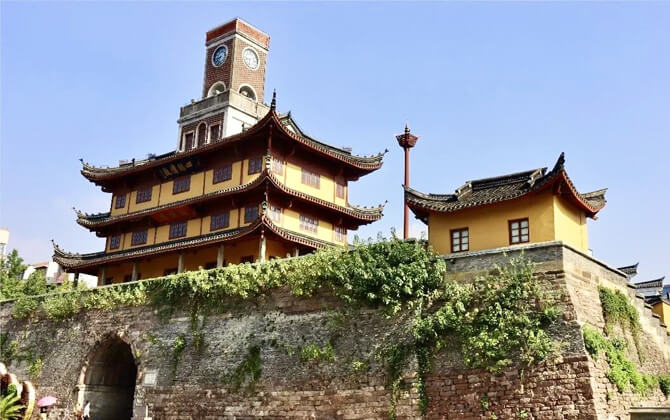
Ningbo’s main attractions are spread across the city, so the metro is a practical way to get around. For central sightseeing, it works especially well and can reduce the need for taxis.
Line 2 is particularly useful for visitors. It links Ningbo Lishe Airport, Ningbo Railway Station, and central areas, making it handy for trips toward Tianyi Pavilion, Moon Lake Park, the Old Bund, and Ningbo University.
Line 1 is helpful for downtown landmarks such as Ningbo Drum Tower and nearby commercial areas. It is a good choice if you want to mix sightseeing with shopping, food, and a walk around the old city.
Line 4 is the main route for travelers heading toward Dongqian Lake. Because it also serves Ningbo Railway Station, it fits well into a simple station-to-attraction transfer.
Line 3 connects to Ningbo Museum, which is a solid stop if you are interested in local history and cultural exhibits.
For places farther from the urban core, like Xikou Town, Xuedou Mountain, and Tiantong Temple, the metro is only part of the trip. You will usually need a bus, car, or another local transport connection after leaving the station.