The Shenyang Metro is the rapid transit system serving Shenyang, Liaoning Province, China. It is a core part of the city transport network and, as of January 2025, operates 6 lines, 136 stations, and 186.7 kilometers (116.0 miles) of track across 9 of Shenyang’s 10 municipal districts. The system is operated and built by Shenyang Metro Group Co., Ltd., and it connects major railway stations, the city center, residential districts, and Shenyang Taoxian International Airport.
| Key | Information |
|---|---|
| System type | Rapid transit metro system |
| City | Shenyang, Liaoning Province, China |
| Operator | Shenyang Metro Group Co., Ltd. |
| Opened | September 27, 2010 |
| Operating lines | Line 1, Line 2, Line 3, Line 4, Line 9, and Line 10 |
| Stations | 136 operating stations |
| Network length | 186.7 kilometers (116.0 miles) |
| Coverage | 9 of Shenyang’s 10 municipal districts; Liaozhong District is not included |
| Annual ridership | 310 million passengers in 2020 |
| Average daily ridership | 849,000 passengers in 2020 |
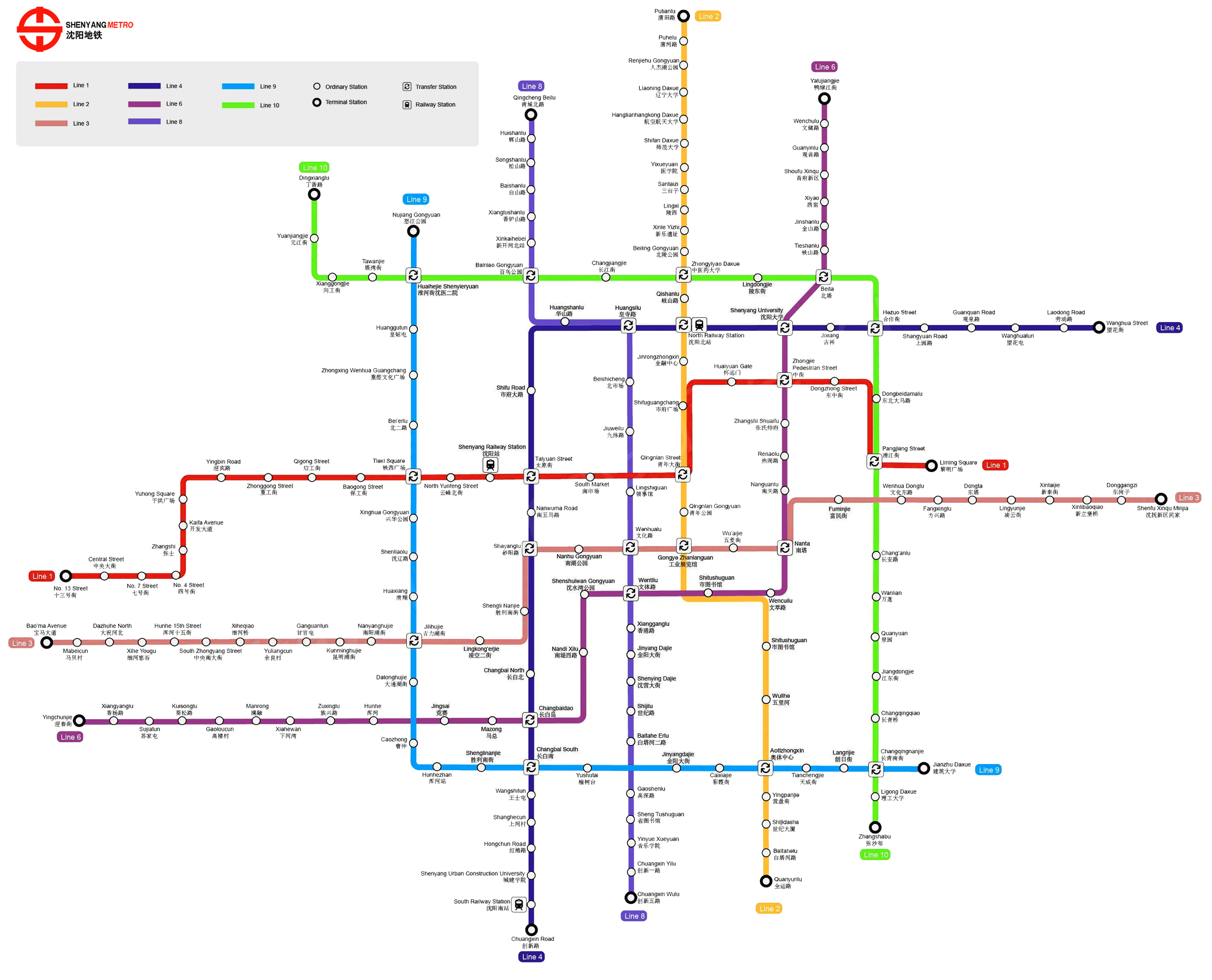
Shenyang Metro Map
Map of Shenyang Metro showing different lines. Click on the map to enlarge it or download the Shenyang Metro map in PDF format.
Lines and Stations
Shenyang Metro has grown from its original Line 1 into a wider public transport system serving key districts, railway hubs, airport access points, and residential areas. For route planning, check the stations map before traveling, especially if you need to transfer between lines.
| Line | Route | Opened | Length | Stations |
|---|---|---|---|---|
| Line 1 | Shisanhaojie – Shuangma | 2010 | 43.95 km (27.3 mi) | 32 |
| Line 2 | Putianlu – Taoxianjichang | 2012 | 45.58 km (28.3 mi) | 33 |
| Line 3 | Lida – Nanliguan | 2024 | 23 km (14.3 mi) | 14 |
| Line 4 | Zhengxinlu – Chuangxinlu | 2023 | 34.112 km (21.2 mi) | 23 |
| Line 9 | Nujianggongyuan – Jianzhudaxue | 2019 | 28.996 km (18.0 mi) | 23 |
| Line 10 | Dingxianghu – Zhangshabu | 2020 | 27.2 km (16.9 mi) | 21 |
| Total | Operating network | — | 186.7 km (116.0 mi) | 136 |
Line 1 is an east-west route. Construction began on November 18, 2005, trial service started in September 2009, and public service opened on September 27, 2010. It originally ran between Shisanhaojie and Limingguangchang.
Line 2 is a north-south route. Construction began on November 18, 2006, trial operation started on December 30, 2011, and the line opened on January 9, 2012. Later extensions in 2013, 2018, and 2023 helped connect central Shenyang with Taoxian Airport.
Line 9 opened on May 25, 2019, followed by Line 10 on April 29, 2020. Line 4 opened on September 29, 2023, and the western part of Line 3 opened on December 30, 2024.
Several projects remain under construction: the eastern part of Line 3 from Nanlinguan to Fangjialan, Line 6 Phase 1 from Yalujiangbeijie to Shaliulu, the Line 9 eastern extension to Shimiaozi, and the Line 10 southern extension to Dingxiangjie.
Ticketing and Fares
Shenyang Metro fares are distance-based and counted by the number of stations traveled. The origin station is not included in the count, which makes the station count a simple fare calculator for most trips.
| Trip length | Ticket price |
|---|---|
| Up to 8 stations | CNY 2, about US$0.28 |
| 9 to 12 stations | CNY 3, about US$0.42 |
| 12 stations or more | CNY 4, about US$0.56 |
| General distance-based fare range listed in service notes | CNY 2–8, about US$0.28–US$1.12 |
Ticket options include a Single Ticket, Ordinary Charge Card, Guan’ai Card, and Xiyanghong Card. The Ordinary Charge Card gives a 5% discount on the standard fare. The Guan’ai Card gives a 50% discount for people aged 60 to 69, while the Xiyanghong Card allows people aged 70 and above to travel free on the metro.
One adult may bring one child under 1.3 m free of charge. Single tickets are sold at ticket machines near station entrances, and cards are available from customer service centers. Different cards require different deposits and can be topped up at ticket machines.
Operating Hours
Shenyang Metro does not run 24 hours a day. Published operating hours vary slightly by line and source, so check the schedule today for your route, especially if you are traveling early in the morning or close to the last train.
| Service detail | Timings |
|---|---|
| General operating hours | About 5:30 AM to 10:30 PM, depending on the line |
| Other listed opening hours | 06:00 AM to 10:20 PM, or 06:00 to 22:00 in some service summaries |
| Daily service window also listed | 6:15 AM to 12:03 AM |
| Weekday office-hour frequency | About every 6 minutes |
| Off-peak frequency | About every 8 minutes |
| Weekend frequency | About every 7 to 9 minutes |
| Airport Line 2 service | 06:00 to 23:00, with the last train from the airport at 22:20 |
For accurate opening times, closing time, and route timetable details, use the posted station schedule or official metro service information on the day of travel. Late trips need a little planning, since the system will close after the final departures.
Connections to Other Systems
Shenyang Metro is closely linked with the city’s wider local transport network. It serves Shenyang North Railway Station, Shenyang Railway Station, and Shenyang South Railway Station, and Line 2 provides direct access to Shenyang Taoxian International Airport.
The metro also connects with Shenyang Modern Tram in Hunnan New District. Transfer points include Shenyang South Railway Station and Taoxian Airport, making the tramway useful for local trips beyond the metro route.
| Station | Details |
|---|---|
| Shenyang North Railway Station | Major railway hub connected by metro and airport bus services |
| Shenyang Railway Station | Central rail hub with metro access and airport bus connections |
| Shenyang South Railway Station | Railway station with links to the metro and Shenyang Modern Tram |
| Taoxian Airport Station | Metro Line 2 station serving Shenyang Taoxian International Airport |
| Youth Street | Important transfer area for trips between the airport, city center, and other metro lines |
| Middle Street | Useful station for central Shenyang and shopping areas |
Connectivity is still improving as the system expands. Projects such as Line 3, Line 6, the Line 9 eastern extension, and the Line 10 southern extension are expected to strengthen cross-city travel and make transfers between transport modes easier.
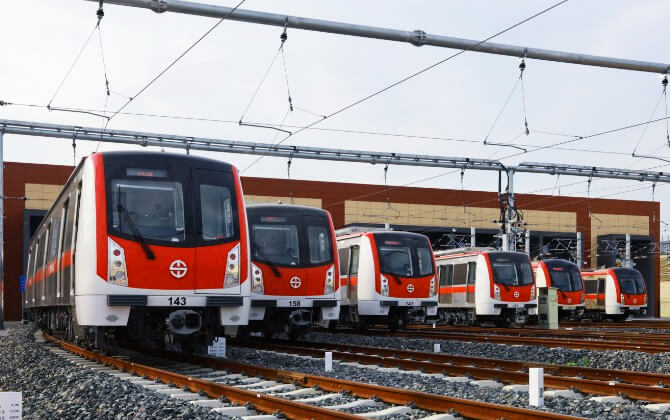
Shenyang Metro has also upgraded communications infrastructure for smoother train operations. Lines 9 and 10 use LTE-M for train-to-ground communications, and Line 1 has been reconstructed with a single LTE-M network for CBTC and trunking services.
Airport Connections
Shenyang Taoxian International Airport (SHE) is in Hunnan District, about 30 kilometers (18.6 miles) south of downtown Shenyang. The airport’s operating terminal is Terminal 3, which handles domestic and international flights. Main ground transport points include the Airport Metro Station on Line 2, the Airport Bus Station, official taxi and ride-hailing zones, and the B Parking Lot.
Metro Line 2 is usually the most cost-effective airport connection. The station is on the T3 B1 floor, with elevator access from the arrivals hall. Trains operate from 06:00 to 23:00, and the last train from the airport departs at 22:20. Peak-hour frequency is typically 4–6 minutes, while off-peak trains run every 7–9 minutes.
The Airport Express Bus is useful for travelers heading to railway stations or major downtown hubs, especially with luggage. Services depart from T3 Exit 8. Taxis and ride-hailing are better for door-to-door travel, late arrivals, families, or passengers with heavy bags; official taxi queues are at T3 Exit 8, while ride-hailing pickups use the T3 B Parking Lot.
| Station | Details |
|---|---|
| Middle Street | Metro Line 2 is the simplest option and takes about 55 minutes |
| Shenyang Imperial Palace | Take Metro Line 2 and transfer via Youth Street Station, or use the airport bus or ride-hailing |
| Shenyang North Railway Station | Airport Bus Line 1 is the most direct public transport option; Metro Line 2 is also traffic-free |
| Shenyang Railway Station | Use Airport Bus Line 2, or transfer by metro from Line 2 to Line 4 |
During the morning peak, roughly 07:00–09:30, and the evening peak, roughly 17:00–19:30, road congestion can be heavy on airport routes. If you are traveling during rush hour or snowy weather, the metro is often the safer choice for predictable running time.
For drop-offs and pickups, use the kiss-and-ride zone at T3 B Parking Lot. Do not stop on airport access roads, where parking is not permitted. For late-night arrivals after the metro has closed, use the night shuttle bus from T3 Exit 8 or an official taxi.
Facilities and Services
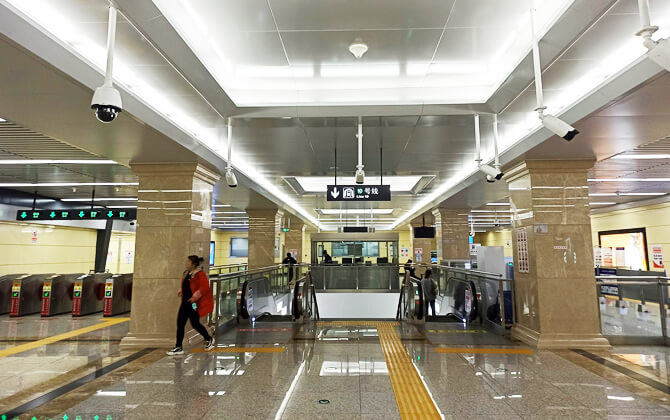
Shenyang Metro stations provide practical facilities for everyday travel. Each station connects with a nearby bus line, helping passengers continue by city transport after leaving the metro. Platform screens show train schedules and directions, while announcements are made in Chinese and English.
Inside trains, side seating helps fit more passengers during busy periods. Escalators and lifts support elderly passengers and people with disabilities. Platform screen doors improve safety while passengers wait for trains.
Keep your ticket or card after entering the station, because you will need it at the exit gate. If a ticket machine is unavailable or difficult to use, go to the ticket counter. In crowded cars, keep your bag in front of you and stay aware of your belongings.
Rules
Shenyang Metro rules are straightforward and help keep the system safe, orderly, and easy to use.
- Single tickets must be used on the day of purchase or they become invalid.
- Begging is not allowed at stations or on trains.
- Stand behind the marked line on the platform when a train is approaching.
- Let passengers get off before you board.
- For refund questions, go to the passenger service center at the relevant station.
Refunds are available in specific situations. An unused one-way ticket with no entry record can be refunded at the purchase station within 30 minutes if the ticket card information is readable. If you cancel a trip after entering, you may apply at the entry station within 5 minutes. If you miss the last train at the entry station, you may apply for a refund at that station on the same day.
For ordinary one-way tickets, the readable ticket is collected and the equivalent price is refunded in cash. For Shengjingtong cards and QR code payments, including Shengjingtong, WeChat, Alipay, and UnionPay, the consumption record is canceled. In these cases, passengers leave through the side door.
Historical Overview
Shenyang was one of the first Chinese cities to consider a metro. The earliest written plan dates to 1940, during the Manchurian period, when an Osaka-based company proposed a 52-kilometer (32.3-mile) network. The plan was not built because of the Second Sino-Japanese War and the Chinese Civil Wars.
After the wars, the project returned when the Chinese government decided that Shenyang, along with Beijing, Shanghai, and Tianjin, should build metro systems for transportation and military purposes. The system was also intended to serve as an air raid shelter during wartime. Construction began in 1965 but was suspended because of the Cultural Revolution.
Work restarted in 1974 on a route roughly following today’s Line 1, then stopped again in 1982 due to limited funds and resources. In the early 1990s, a light rail option was considered but later abandoned. When Shenyang’s economy recovered around 2000, congestion and pollution gave the metro plan new momentum, and the central government approved the subway proposal on November 8, 2005.
Construction of Line 1 began on November 18, 2005. Trial operation started in September 2009, and full service began on September 27, 2010. Line 2 opened on January 9, 2012, followed by later extensions in 2013, 2018, and 2023. Line 9 opened in 2019, Line 10 in 2020, Line 4 in 2023, and the western part of Line 3 in 2024.
Future Expansion Plans
Shenyang Metro continues to expand in phases, with new lines and extensions aimed at improving city coverage, strengthening transport links, and reducing pressure on busy routes.
| Planned opening | Route | Terminals | Length | Stations | Status |
|---|---|---|---|---|---|
| 2026 | Line 3 eastern part | Nanlinguan to Fangjialan | 18.27 km (11.4 mi) | 13 | Under construction |
| 2026 | Line 6 Phase 1 | Yalujiangbeijie to Shaliulu | 27 km (16.8 mi) | 23 | Under construction |
| 2028 | Line 9 eastern extension | Jianzhudaxue to Shimiaozi | 7.7 km (4.8 mi) | 5 | Under construction |
| 2029 | Line 10 southern extension | Zhangshabu to Dingxiangjie | 24.5 km (15.2 mi) | 16 | Under construction |
These expansion projects support a wider route plan for Shenyang’s metro system, with better regional coverage and stronger links between rail stations, airport access, and growing districts.
Tips for Traveling
For a smooth trip, keep your ticket or card until you exit. If you are using a single ticket, use it on the same day you buy it. The system is simple once you get used to it, but checking the train schedule and stations list before you go can save time.
On platforms, wait behind the marked line and let arriving passengers leave before boarding. In crowded trains, keep bags in front of you and watch your belongings.
If ticket machines are not working or feel confusing, use the ticket counters. Announcements are in Chinese and English, and platform screens show directions and train timings, which helps when changing lines.
Many metro stations connect with bus routes, so transfers between metro and local transport are often convenient. For bus travel, listen for the approaching stop; stop names are announced in English, which is helpful if you are new to the city.
- Check the route timetable before late-evening trips.
- Confirm operating hours and timings today for the line you plan to use.
- Keep your ticket, card, or QR payment ready at exit gates.
- Use map apps to find the nearest station and plan your route.
- Choose the metro over road transport during airport rush hours when possible.
Nearby Attractions
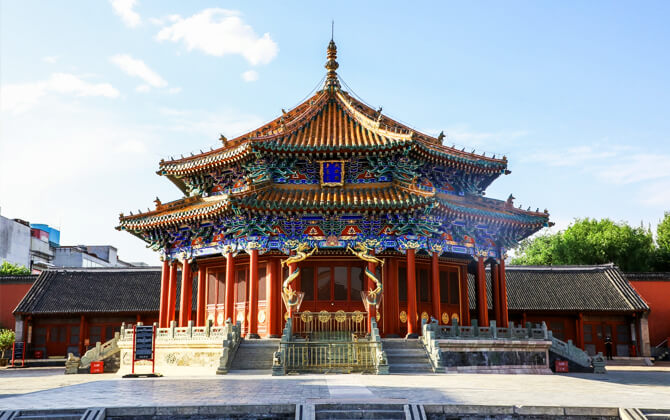
Shenyang Metro is a convenient way to reach well-known attractions, shopping streets, parks, and transport hubs. It is especially useful for sightseeing because major landmarks are connected by reliable public transportation across the city.
| Station | Details |
|---|---|
| Zhong Street Station | Use Line 1 for Shenyang Imperial Palace and Zhong Street, a busy shopping area with strong local character |
| Taiyuan Street area | Line 1 provides access to a major shopping and dining district |
| Taoxian Airport Station | Line 2 serves Shenyang Taoxian International Airport |
| Provincial Museum Station | Line 2 is useful for the Liaoning Provincial Museum |
| Shenyang North Station | Line 2 connects to one of the city’s main railway hubs |
| Industrial University Station | Line 3 serves Shenyang University of Technology |
| Nanliguan Station | Line 3 gives access to Nanliguan Park, a quieter urban leisure spot |
| Hongchun Road Station | Line 4 is useful for visiting Shenyang Botanical Garden |
| Olympic Sports Center Station | Line 9 serves Shenyang Olympic Sports Center, a venue for sports and cultural events |
| Dingxiang Lake Station | Line 10 is near Shenyang International Software Park, a major high-tech industry hub |