The Baltimore Metro SubwayLink is Baltimore’s only heavy-rail rapid transit system, linking downtown with northwestern suburbs and East Baltimore. Operated by the Maryland Transit Administration, the line runs from Owings Mills to Johns Hopkins Hospital on a reverse J-shaped route, with underground tracks in the city center and elevated or surface sections farther out. The system opened in 1983, expanded in 1987 and 1995, and today covers 15.4 miles (24.8 km) with 14 stations. End-to-end running time is about 30 minutes, and the Metro works as a core part of public transport in Baltimore, with bus connections at most stations and rail links nearby at Lexington Market and State Center.
| Key | Information |
|---|---|
| System | Baltimore Metro SubwayLink |
| Type | Heavy-rail rapid transit |
| Operator | Maryland Transit Administration |
| Route | Owings Mills to Johns Hopkins Hospital |
| Length | 15.4 miles (24.8 km) |
| Stations | 14 |
| Underground stations | 8 |
| Opening | 1983 |
| Expansions | 1987 and 1995 |
| Typical end-to-end running time | About 30 minutes |
| Weekday operating hours | 5:00 a.m. to midnight |
| Weekend operating hours | 6:00 a.m. to midnight |
| Ridership | 5,487,000 rides in 2024 |
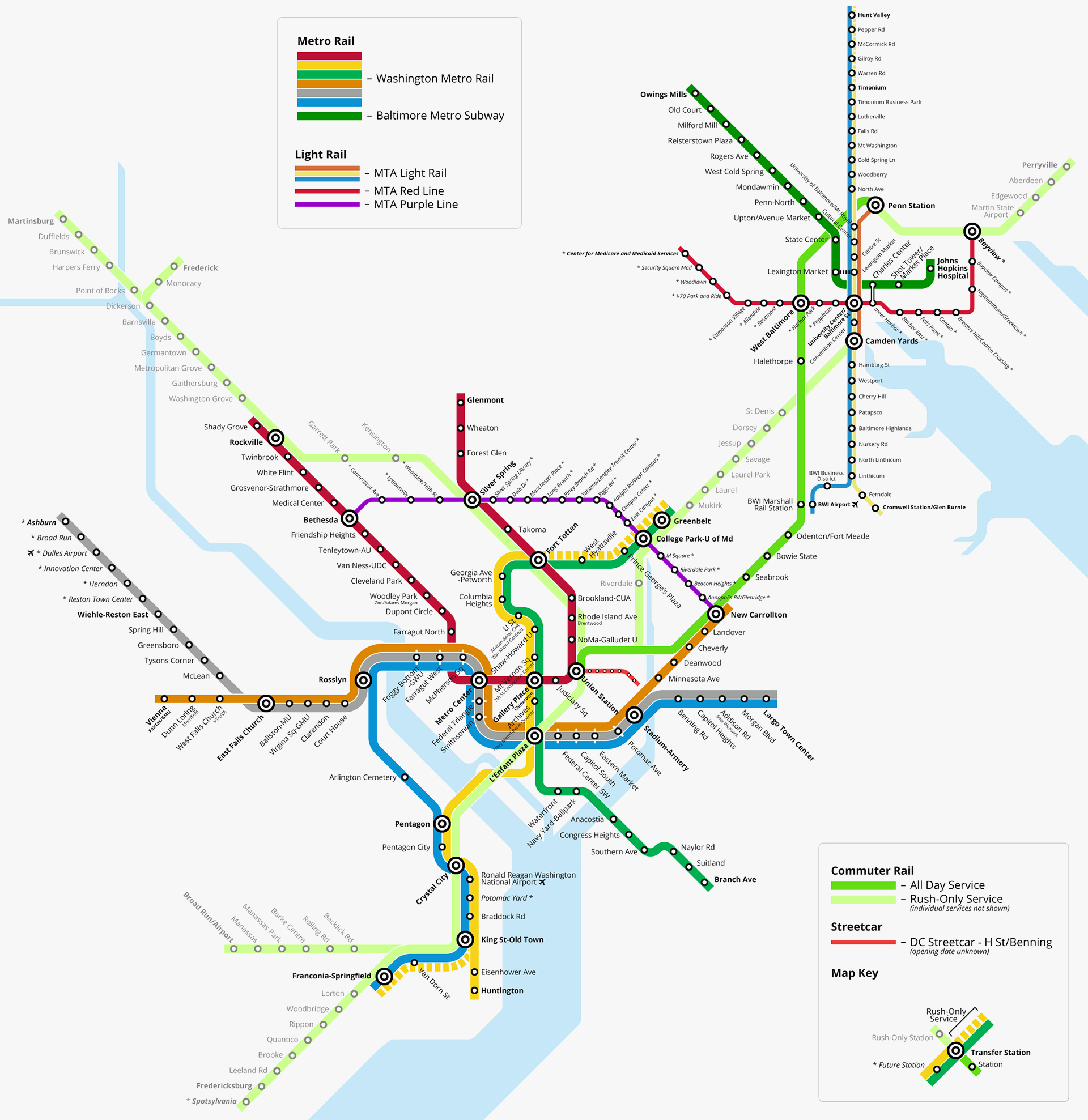
Baltimore Metro Subway Map
Map of Baltimore Metro Subway showing different lines and stations. Click on the map to enlarge it or download the Baltimore Metro map in PDF format.
Lines and Stations
The Baltimore Metro Subway has one line with 14 stations. It runs from Owings Mills in Baltimore County to Johns Hopkins Hospital in East Baltimore and serves as the city’s only heavy-rail line. Downtown, the route goes underground; outside the center, much of the system is elevated or at grade.
If you are checking the stations map or a stations list before a trip, this is the full route in order.
| Station | Details |
|---|---|
| Owings Mills | Western terminus in the median of I-795; served by LocalLink 87 and 89. |
| Old Court | In Lochearn; served by LocalLink 37 and 83. |
| Milford Mill | In Lochearn; served by LocalLink 81 and 85. |
| Reisterstown Plaza | In Glen; served by LocalLink 82. |
| Rogers Avenue | In Arlington; served by LocalLink 28, 30, 31, 34, 80, 82, 89. |
| West Cold Spring | In Arlington; served by LocalLink 28 and 82. |
| Mondawmin | Major transfer hub near Mondawmin Mall; served by CityLink NV, LM, YW and LocalLink 22, 26, 29, 82, 83, 85, 91. |
| Penn-North | In Penn-North; served by CityLink LM, GD and LocalLink 85. |
| Upton–Avenue Market | In Upton; served by CityLink LM. |
| State Center | In Mount Vernon; served by CityLink LM, YW; LocalLink 54, 73; Express BusLink 154; MTA Commuter bus 410. |
| Lexington Market | Downtown station with a nearby Light RailLink connection; served by CityLink BL; LocalLink 54, 71, 80, 94; Express BusLink 105, 115, 120, 150, 154, 163; MTA Commuter bus 320. |
| Charles Center | Major downtown hub and former terminus; served by CityLink OR, GR, SV, RD, PR; QuickLink 40; LocalLink 51, 56, 65, 67, 71, 76, 78, 95; Express BusLink 103, 105, 120, 150, 160; MTA Commuter bus 210, 215, 310, 410, 411, 420. |
| Shot Tower | In downtown Baltimore; served by CityLink OR, BL, PR; QuickLink 40; LocalLink 54, 67, 76, 78; Express BusLink 105, 150, 160. |
| Johns Hopkins Hospital | Eastern terminus with direct access to the hospital area; served by CityLink PK, GD, BR, LM; LocalLink 21, 56; Express BusLink 105, 115, 120, 160; MTA Commuter bus 210, 215, 310, 320, 411, 420. |
The system opened in 1983 between Charles Center and Reisterstown Plaza, then expanded west to Owings Mills in 1987 and east to Johns Hopkins Hospital in 1995. In 2015, it was renamed Metro SubwayLink during an MTA rebrand.
Most stations connect to bus routes, so the subway fits neatly into Baltimore city transport and local transport across the corridor.
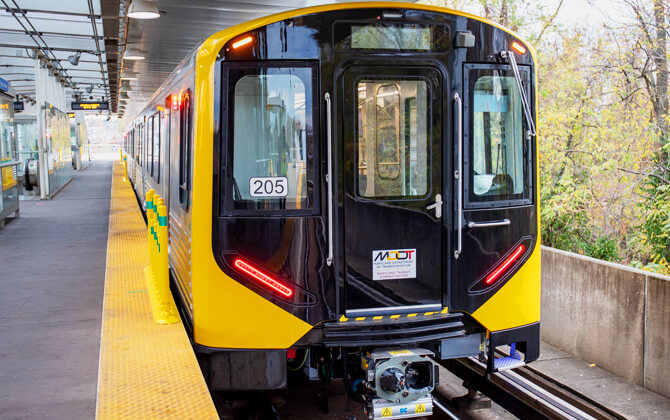
Baltimore Metro Subway Timings and Frequency
If you are looking for Baltimore Metro Subway timings today, the usual operating hours are straightforward. On weekdays, trains run from 5:00 a.m. to midnight. On weekends, opening time is 6:00 a.m., and the closing time is midnight.
The full route running time from one end of the line to the other is about 30 minutes. That makes cross-city trips pretty manageable.
| Service detail | Timings |
|---|---|
| Weekday opening hours | 5:00 a.m. to midnight |
| Weekend opening hours | 6:00 a.m. to midnight |
| End-to-end running time | About 30 minutes |
| Weekday rush hour frequency | Every 8 minutes |
| Weekday evening frequency | Every 11 minutes |
| Late night and weekend frequency | Every 15 minutes |
For trip planning, the starting time, working hours, and train schedule vary mainly by time of day. Rush hour service is the most frequent, while late evenings and weekends have longer gaps between trains. If you need the last train or schedule today, it is best to plan around the midnight close.
Fares and Tickets
Baltimore Metro Subway fare is part of MTA’s core service pricing. You can pay with the CharmPass mobile app and, for some trips, cash or station ticket machines. A one-way ticket also includes a 2-hour free transfer window across core services such as local bus and Light Rail.
| Ticket type | Price | Approx. price in USD |
|---|---|---|
| Single Trip / One-way – Full Fare | $2.00 | US$2.00 |
| Single Trip / One-way – Senior/Disability | $1.00 | US$1.00 |
| Single Trip / One-way – Student | $1.50 | US$1.50 |
| Single Trip / One-way – Mobility | $2.20 | US$2.20 |
| Day Pass / 1-Day Pass – Full Fare | $4.60 | US$4.60 |
| Day Pass / 1-Day Pass – Senior/Disability | $2.30 | US$2.30 |
| Weekly / 7-Day Pass | $22.00 | US$22.00 |
| Monthly / 31-Day Pass | $77.00 | US$77.00 |
| All Access Student Transit Pass | $57.00 | US$57.00 |
| Mobility 20-Trip Book | $44.00 | US$44.00 |
Single Trip Fare
For CityLink, LocalLink, and Express BusLink, cash fares require exact change. Fareboxes do not give change, and no ticket is issued. With a CharmCard, the fare is deducted automatically from stored value.
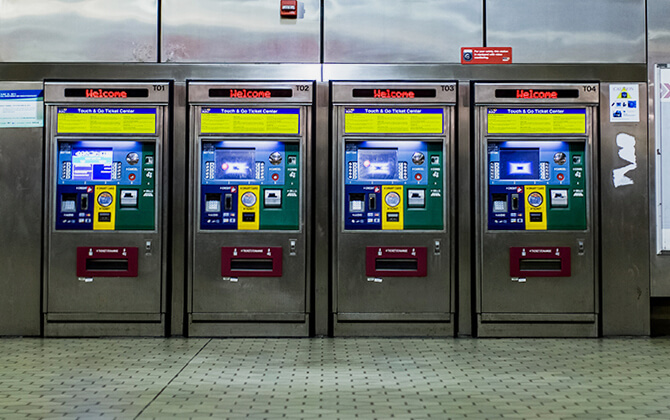
For the Metro Subway and Light Rail, you can buy a single-trip ticket at a station ticket vending machine and receive a Go Pass. One-way fares are also available in the CharmPass app.
Children
Children age 12 and under ride free on MTA Local Link services, including bus, light rail, and Metro. Children age 6 and under ride free on MARC Train and Commuter Bus. Children age 13 and above with an MDOT MTA Student ID pay the student fare.
CharmPass and Pass Options
CharmPass is MTA’s mobile ticket app for Metro Subway, BaltimoreLink bus, Light Rail, MARC Train, and Commuter Bus services. It is available for Apple and Android devices.
Pass options include 1-Day, 7-Day, and 31-Day passes for core services, plus CharmFlex packs for more flexible travel. CharmFlex fares do not need to be used on consecutive days.
The Monthly Go Pass is valid for unlimited travel on Local Service from the first day of the designated month until 3:00 a.m. on the first day of the following month. The CharmCard and CharmPass 31-Day Pass stay valid for 31 consecutive days from first activation.
If you are comparing fare, ticket price, cost, or looking for a day pass, these are the main options to know. No fare calculator was provided in the source material.
Connections to Other Systems
The Metro SubwayLink is tightly connected to Baltimore public transport, especially the bus network. Most stations are served by one or more MTA bus routes, making it easy to continue your journey on CityLink, LocalLink, Express BusLink, or commuter bus services.
Some stations stand out as major transfer points. Mondawmin, Charles Center, and Johns Hopkins Hospital connect with multiple bus services. State Center and Lexington Market also provide links to Light RailLink, so they are important interchange points in the wider transport system.
There are no direct in-station transfers to Light RailLink or MARC, but walking connections are available. Lexington Market is about 200 yards (0.11 miles / 0.18 km) from the Light RailLink stop of the same name. State Center is about 1.5 blocks from Cultural Center on Light RailLink. Baltimore Penn Station is about a half-mile (0.8 km) walk from State Center, and MARC Camden Station is about five blocks from Lexington Market Metro station.
In practice, the subway acts as the heavy-rail spine of transportation in Baltimore, while bus routes handle neighborhood access and Light RailLink and MARC extend the rail network farther out.
Airport Connections
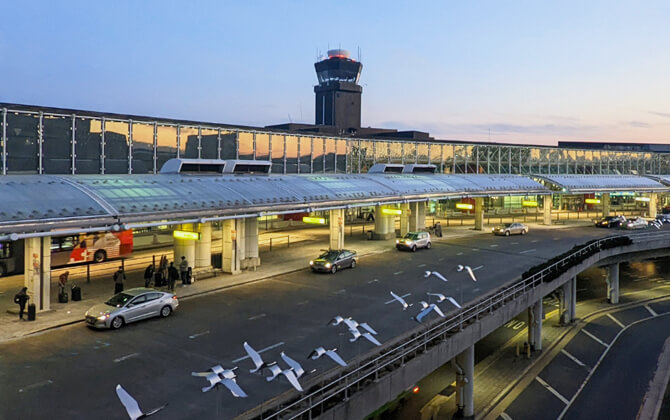
The Baltimore Metro Subway does not go directly to BWI Marshall Airport. Airport access relies on transfers through other rail services and shuttle bus connections.
For BWI Airport, Light RailLink serves both BWI Airport and BWI Business District. From the subway, the main transfer point is Lexington Market, where the Light Rail stop is about 200 meters (0.2 km / 0.12 miles) from the Subway station.
BWI Marshall Airport is also connected through the Amtrak/MARC station, with free shuttle buses running between the rail station and the airport terminals. So if you are planning an airport trip, expect a subway-to-light rail or subway-to-rail-and-bus connection rather than a direct path train-style ride to the terminal.
- BWI Airport is served by Baltimore Light RailLink.
- BWI Business District is the other airport-area Light RailLink stop.
- Lexington Market is the main subway transfer point for airport rail travel.
- BWI Marshall Airport also has shuttle connections from the rail station.
Baltimore Metro Subway Parking
The parking section in the source material refers mainly to wider regional rail parking rather than station parking specific to Baltimore Metro Subway stations. It notes that parking availability and parking charges vary by station and by length of stay, and that a non-rider fee may apply.
Current Parking Availability
Parking availability is based on real-time entry and exit activity at Metro lots and garages. It is only an estimate, not an exact count, and it does not include reserved or accessible spaces. Some spots may also be temporarily unavailable during improvement work.
- Available: ample parking spaces are available.
- Limited: a limited number of parking spaces are available.
- Full: no parking spaces are available.
This availability information applies only to Metro-operated parking lots and garages.
Facility Details
| Station | Details |
|---|---|
| Branch Av | 4707 Old Soper Rd, Suitland, MD 20746 |
| Park & Ride daily parking | Mon. – Fri. $4.95 / US$4.95 and $8.95 / US$8.95 |
| Payment | SmarTrip and credit cards |
| Current parking availability | Lot A: Available; Lot B: Available; Lot C: Available |
| Reserved parking | Rows A3 and B1; monthly reserved parking fee $65.00 / US$65.00 plus daily rate |
| Kiss & Ride hourly parking | Payment by credit cards, coins, ParkMobile App, or by calling 877-727-5758 |
To get the lower daily parking rate at Branch Av, riders must take a valid Metrorail trip using a SmarTrip card, use the same card to pay on exit, travel at least two stops in total, and leave the parking facility within two hours after the trip is completed. Using a credit or debit card as part of Tap. Ride. Go. results in the non-rider rate.
The source also notes that MTA MARC Park and Ride lots are generally free for patron parking, though space can be limited and some lots fill before the morning rush ends. For BWI Marshall Rail Station, a free parking program is available only for Ticket-by-Mail customers under specific conditions.
If you need station parking, parking charges per day, or current availability, check the station-specific pages before you travel.
Tips and Rules
The MTA Fare Tariff Policy sets out the rules, prices, and fare collection standards for Baltimore core services, including Metro Subway, bus, light rail, Mobility, and Call-a-Ride. It covers regular and discounted fares, pass eligibility, refunds, fare dispute appeals, and penalties for fare evasion. The policy listed in the source is effective from July 27, 2025.
General Rules and Manners
- Use headphones with all audio and video devices.
- Let passengers get off the train before you board.
- Be courteous.
- Seats next to the doors are reserved for senior citizens and riders with disabilities.
- Give your seat to someone who needs it more than you do.
- Put trash in trash bins and newspapers in recycling bins.
- Give senior citizens and riders with disabilities priority when using elevators.
- Stand at least two feet behind the platform edge.
- Follow official instructions and stay calm in emergencies.
- Step carefully over the gap between the train and platform.
- Report unattended packages to a transit police officer, station manager, or train operator.
Do not eat, drink, smoke, or litter on Metro vehicles or in stations. Do not block or force doors, touch them while opening or closing, lean on them, run in stations, sit on the platform edge, or walk on the trackbed. The third rail carries 750 volts of electricity, so always stay clear. These basic rules help keep the system safe.
Escalator Safety
- Stand to the right facing forward and walk on the left.
- Hold the handrail without leaning on it.
- Keep feet away from the sides.
- Watch for loose clothing or shoelaces that could get caught.
- Use the emergency button if an escalator must be stopped in an emergency.
Do not ride barefoot, run on escalators, move in the wrong direction, sit on the steps or handrail, or use the escalator with a stroller, wheelchair, handcart, or heavy load.
For Parents
- Hold a small child’s hand at all times.
- Use the elevator if you have a stroller.
- Check that clothing and shoelaces are secure.
- Make sure your child gets on and off the train with you.
- Have a plan in case you get separated, and tell a Metro employee if it happens.
Do not let a child sit on escalator steps or on the platform edge, and do not let children run or play in stations or on trains.
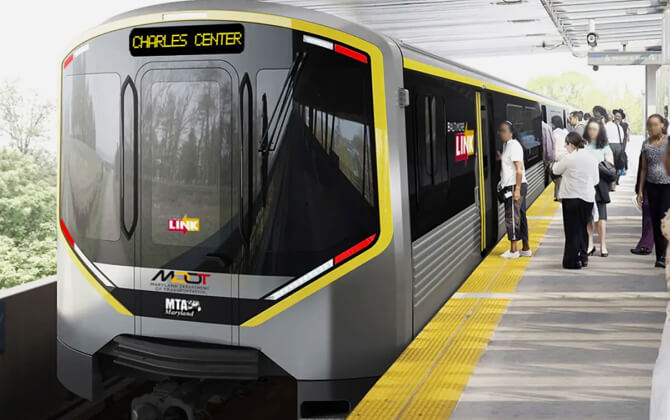
History
The history of the Baltimore Metro Subway goes back to the Baltimore Area Mass Transportation Plan of 1965, which proposed six rapid transit lines from a central city loop. A 1968 study expanded that idea into a 71-mile (114 km) rail system. Later, the concept was reduced in the 1971 Phase 1 plan to a 28-mile (45 km) network with two lines: one northwest to Owings Mills and one south to Glen Burnie and the airport.
Phase 1 received funding approval from the Maryland General Assembly in 1972. In 1975, after lobbying from Anne Arundel County residents, the MTA removed the south line from the plan. Much of that corridor was later used for Baltimore Light RailLink.
The Metro Subway opened on November 21, 1983, with a 7.6-mile (12.2 km) segment between Charles Center and Reisterstown Plaza. On July 20, 1987, it expanded by 6.1 miles (9.8 km) to Owings Mills in Baltimore County, with part of the route in the median of Interstate 795. A further 1.6-mile (2.5 km) extension from Charles Center to Johns Hopkins Hospital opened on May 31, 1995.
By the time the project was completed in 1995, total cost had reached $1.392 billion. In 2015, the system was renamed Metro SubwayLink. Work on underground cellular service in the tunnels began in September 2021 and was expected to finish by June 2022, but the source notes that as of December 2024 the project was still incomplete.
Today, the line is 15.4 miles (24.8 km) long and includes underground, elevated, and at-grade sections. Eight of the 14 stations are underground.
Future Extensions
Future expansion in Baltimore rail transport is focused more on separate corridor projects than on extending the current Metro SubwayLink line. The source highlights the Red Line, planned as a high-frequency, high-capacity light rail route to improve east-west travel across the Baltimore region, and the Purple Line in the Washington suburbs.
Other regional projects mentioned include the Penn-Camden Connector, which would restore a historic passenger rail connection between the Penn Line and Camden Line, and the Light Rail Modernization Program, aimed at vehicles, signals, stations, track, and maintenance facilities.
For the Metro Subway itself, MTA has said the existing tunnel is not considered a good option for a phased heavy-rail Red Line approach. According to the source, it would not match project goals and would likely add time, complexity, and funding challenges. So for now, expansion planning is centered on other routes rather than a direct extension of the current subway route.
Nearby Attractions
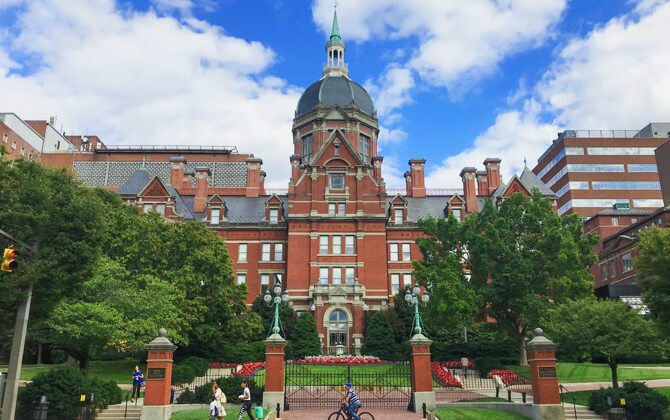
The Baltimore Metro Subway is handy for reaching several well-known city attractions, especially downtown and in East Baltimore. Some places are within easy walking distance of stations, while others are best reached by connecting bus or Light Rail service.
- Inner Harbor — From Charles Center, you can reach the waterfront area, including the Maryland Science Center, Historic Ships, the Seven Foot Knoll Lighthouse, and the National Aquarium.
- Lexington Market — This historic market sits directly above Lexington Market station and is one of the easiest stops for food and local shopping.
- Little Italy — Shot Tower station puts you within walking distance of restaurants, bakeries, and neighborhood attractions.
- Star-Spangled Banner Flag House — Also near Shot Tower, this museum is a short walk from the station.
- Reginald F. Lewis Museum of Maryland African American History & Culture — Located in Jonestown and reachable from Shot Tower station.
- Washington Monument & Mount Vernon — Use Centre St station to explore Mount Vernon and nearby cultural landmarks.
- Mondawmin area — Mondawmin station connects to bus routes toward Druid Hill Park and the Baltimore Zoo.
- Johns Hopkins Hospital — The eastern terminus gives direct access to the hospital campus and nearby East Baltimore destinations.
For broader sightseeing, the subway also links with multiple bus routes, making it easier to move around the city beyond the immediate station areas.