The Mass Transit Railway, or MTR, is Hong Kong’s main rapid transit system and one of the city’s most important public transport networks. It has been running since 1979 and serves Hong Kong Island, Kowloon, the New Territories, and Lantau Island. Today, the system includes major commuter rail lines, the Airport Express, Light Rail, feeder bus links, and connections to High Speed Rail and cross-boundary services. Known for safe, reliable service and strong city transport integration, the MTR is a core part of transportation in Hong Kong for both daily travel and visitor trips.
| Key | Information |
|---|---|
| System name | Mass Transit Railway (MTR) |
| Opened | 1979 |
| Coverage | Hong Kong Island, Kowloon, the New Territories, and Lantau Island |
| Main services | Commuter rail lines, Airport Express, Light Rail, feeder bus, High Speed Rail connections |
| Cross-boundary link | East Rail Line to Lo Wu and Lok Ma Chau for Shenzhen access |
| Airport link | Direct rail service to Hong Kong International Airport and AsiaWorld-Expo via Airport Express |
| Performance | Passengers arrive on time 99% of the time |
| Role in local transport | Key part of Hong Kong public transport and transport system integration |
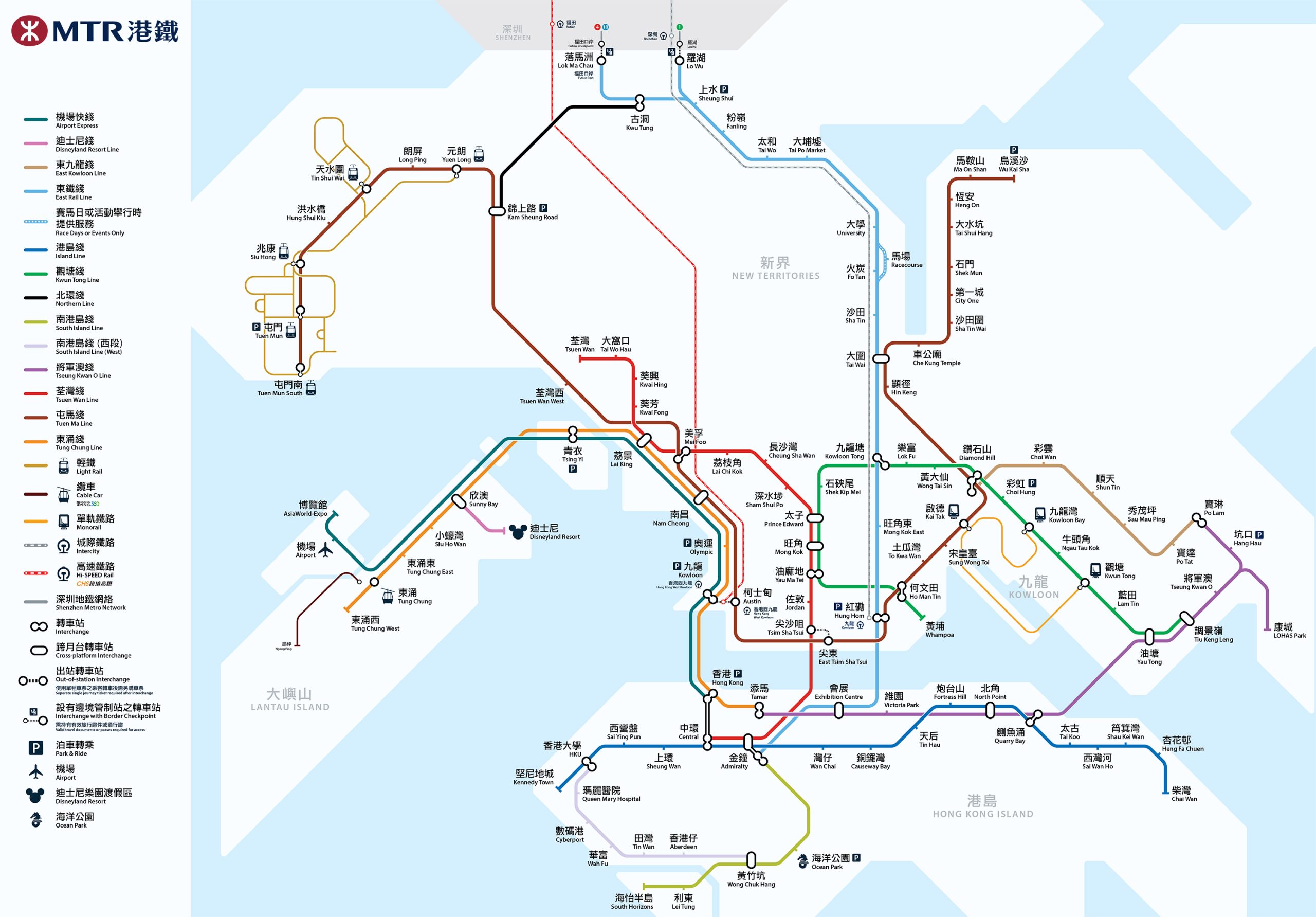
Metro map of Hong Kong
Map of Hong Kong Metro showing different lines. Click on the map to enlarge it or download the Hong Kong Metro map in PDF format.
Lines and Stations
The MTR route network is organized by line, with stations grouped by service route. It includes heavy rail lines and the Airport Express, and several stations work as interchanges. If you are checking a stations map or building a route plan, these are the main lines and stations list from the draft.
Kwun Tong Line
| Station | Details |
|---|---|
| Tiu Keng Leng | Station on the Kwun Tong Line |
| Yau Tong | Station on the Kwun Tong Line |
| Lam Tin | Station on the Kwun Tong Line |
| Kwun Tong | Station on the Kwun Tong Line |
| Ngau Tau Kok | Station on the Kwun Tong Line |
| Kowloon Bay | Station on the Kwun Tong Line |
| Choi Hung | Station on the Kwun Tong Line |
| Diamond Hill | Station on the Kwun Tong Line |
| Wong Tai Sin | Station on the Kwun Tong Line |
| Lok Fu | Station on the Kwun Tong Line |
| Kowloon Tong | Station on the Kwun Tong Line |
| Shek Kip Mei | Station on the Kwun Tong Line |
| Prince Edward | Station on the Kwun Tong Line |
| Mong Kok | Station on the Kwun Tong Line |
| Yau Ma Tei | Station on the Kwun Tong Line |
| Ho Man Tin | Station on the Kwun Tong Line |
| Whampoa | Station on the Kwun Tong Line |
Tsuen Wan Line
| Station | Details |
|---|---|
| Tsuen Wan | Station on the Tsuen Wan Line |
| Tai Wo Hau | Station on the Tsuen Wan Line |
| Kwai Hing | Station on the Tsuen Wan Line |
| Kwai Fong | Station on the Tsuen Wan Line |
| Lai King | Station on the Tsuen Wan Line |
| Mei Foo | Station on the Tsuen Wan Line |
| Lai Chi Kok | Station on the Tsuen Wan Line |
| Cheung Sha Wan | Station on the Tsuen Wan Line |
| Sham Shui Po | Station on the Tsuen Wan Line |
| Prince Edward | Station on the Tsuen Wan Line |
| Mong Kok | Station on the Tsuen Wan Line |
| Yau Ma Tei | Station on the Tsuen Wan Line |
| Jordan | Station on the Tsuen Wan Line |
| Tsim Sha Tsui | Station on the Tsuen Wan Line |
| Admiralty | Station on the Tsuen Wan Line |
| Central | Station on the Tsuen Wan Line |
Island Line
| Station | Details |
|---|---|
| Kennedy Town | Station on the Island Line |
| HKU | Station on the Island Line |
| Sai Ying Pun | Station on the Island Line |
| Sheung Wan | Station on the Island Line |
| Central | Station on the Island Line |
| Admiralty | Station on the Island Line |
| Wan Chai | Station on the Island Line |
| Causeway Bay | Station on the Island Line |
| Tin Hau | Station on the Island Line |
| Fortress Hill | Station on the Island Line |
| North Point | Station on the Island Line |
| Quarry Bay | Station on the Island Line |
| Tai Koo | Station on the Island Line |
| Sai Wan Ho | Station on the Island Line |
| Shau Kei Wan | Station on the Island Line |
| Heng Fa Chuen | Station on the Island Line |
| Chai Wan | Station on the Island Line |
South Island Line
| Station | Details |
|---|---|
| Admiralty | Station on the South Island Line |
| Ocean Park | Station on the South Island Line |
| Wong Chuk Hang | Station on the South Island Line |
| Lei Tung | Station on the South Island Line |
| South Horizons | Station on the South Island Line |
Tseung Kwan O Line
| Station | Details |
|---|---|
| LOHAS Park | Station on the Tseung Kwan O Line |
| Po Lam | Station on the Tseung Kwan O Line |
| Hang Hau | Station on the Tseung Kwan O Line |
| Tseung Kwan O | Station on the Tseung Kwan O Line |
| Tiu Keng Leng | Station on the Tseung Kwan O Line |
| Yau Tong | Station on the Tseung Kwan O Line |
| Quarry Bay | Station on the Tseung Kwan O Line |
| North Point | Station on the Tseung Kwan O Line |
Tung Chung Line and Disneyland Resort Line
| Station | Details |
|---|---|
| Hong Kong | Station on the Tung Chung Line and Disneyland Resort Line group |
| Kowloon | Station on the Tung Chung Line and Disneyland Resort Line group |
| Olympic | Station on the Tung Chung Line and Disneyland Resort Line group |
| Nam Cheong | Station on the Tung Chung Line and Disneyland Resort Line group |
| Lai King | Station on the Tung Chung Line and Disneyland Resort Line group |
| Tsing Yi | Station on the Tung Chung Line and Disneyland Resort Line group |
| Sunny Bay | Station on the Tung Chung Line and Disneyland Resort Line group |
| Disneyland Resort | Station on the Tung Chung Line and Disneyland Resort Line group |
| Tung Chung | Station on the Tung Chung Line and Disneyland Resort Line group |
East Rail Line
| Station | Details |
|---|---|
| Admiralty | Station on the East Rail Line |
| Exhibition Centre | Station on the East Rail Line |
| Hung Hom | Station on the East Rail Line |
| Mong Kok East | Station on the East Rail Line |
| Kowloon Tong | Station on the East Rail Line |
| Tai Wai | Station on the East Rail Line |
| Sha Tin | Station on the East Rail Line |
| Fo Tan | Station on the East Rail Line |
| Racecourse | Station on the East Rail Line |
| University | Station on the East Rail Line |
| Tai Po Market | Station on the East Rail Line |
| Tai Wo | Station on the East Rail Line |
| Fanling | Station on the East Rail Line |
| Sheung Shui | Station on the East Rail Line |
| Lo Wu | Station on the East Rail Line |
Tuen Ma Line
| Station | Details |
|---|---|
| Tuen Mun | Station on the Tuen Ma Line |
| Siu Hong | Station on the Tuen Ma Line |
| Tin Shui Wai | Station on the Tuen Ma Line |
| Long Ping | Station on the Tuen Ma Line |
| Yuen Long | Station on the Tuen Ma Line |
| Kam Sheung Road | Station on the Tuen Ma Line |
| Tsuen Wan West | Station on the Tuen Ma Line |
| Mei Foo | Station on the Tuen Ma Line |
| Nam Cheong | Station on the Tuen Ma Line |
| Austin | Station on the Tuen Ma Line |
| East Tsim Sha Tsui | Station on the Tuen Ma Line |
| Hung Hom | Station on the Tuen Ma Line |
| Ho Man Tin | Station on the Tuen Ma Line |
| To Kwa Wan | Station on the Tuen Ma Line |
| Sung Wong Toi | Station on the Tuen Ma Line |
| Kai Tak | Station on the Tuen Ma Line |
| Diamond Hill | Station on the Tuen Ma Line |
| Hin Keng | Station on the Tuen Ma Line |
| Tai Wai | Station on the Tuen Ma Line |
| Che Kung Temple | Station on the Tuen Ma Line |
| Sha Tin Wai | Station on the Tuen Ma Line |
| City One | Station on the Tuen Ma Line |
| Shek Mun | Station on the Tuen Ma Line |
| Tai Shui Hang | Station on the Tuen Ma Line |
| Heng On | Station on the Tuen Ma Line |
| Ma On Shan | Station on the Tuen Ma Line |
| Wu Kai Sha | Station on the Tuen Ma Line |
Airport Express
| Station | Details |
|---|---|
| Hong Kong | Station on the Airport Express route |
| Kowloon | Station on the Airport Express route |
| Tsing Yi | Station on the Airport Express route |
| Airport | Station on the Airport Express route |
| AsiaWorld-Expo | Station on the Airport Express route |
Some stations appear on more than one line, including Admiralty, Central, Kowloon Tong, Lai King, Nam Cheong, Tiu Keng Leng, and Yau Tong. These interchange stations are central to the system and make transfers much easier.
Station layouts and stations map information are available for individual stations in the source material.
Timetable & Operating Hours
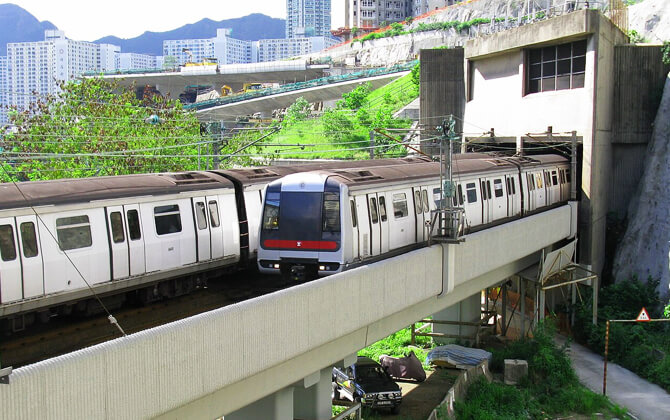
MTR operating hours, opening hours, and closing time vary by line and station, so the most reliable timetable check is through the Trip Planner. It can show fare details, route options, running time, interchange guidance, platform information, station opening times, and the first and last train schedule.
For most regular lines, trains usually start from about 5:30 a.m. to 6:15 a.m. and run until about 12:30 a.m. to 1:15 a.m. The Airport Express has a different train schedule, starting at 5:50 a.m. from Hong Kong Station and 5:54 a.m. from Airport Station, with the last train at 12:48 a.m. In normal service, frequency is usually every 2 to 6 minutes.
| Service detail | Timings |
|---|---|
| Regular MTR lines first train | 05:30-06:15 daily |
| Regular MTR lines last train | 00:30-01:15 daily |
| Regular lines frequency at peak hours | Mon-Fri 8:00-9:30 a.m. and 6:00-7:30 p.m.; every 2-3 minutes |
| Regular lines frequency off-peak, weekends, and holidays | Every 4-6 minutes |
| Airport Express starting time | 05:50 from Hong Kong Station; 05:54 from Airport Station |
| Airport Express last train | 00:48 both directions |
| Airport Express frequency | Every 10 minutes daily |
There is no overnight regular service, though limited extended operating hours may apply on major holidays such as Chinese New Year’s Eve. Service timings today can also change during typhoons or emergencies.
Early in the morning and late at night, train frequency can be lower. On some lines, intervals may stretch to 12 minutes, up to 21 minutes on the East Rail Line between Sheung Shui and Lo Wu or Lok Ma Chau, and up to 25 minutes on some Light Rail routes.
Special holiday schedule enhancements are provided during periods such as Lunar New Year’s Eve, Mid-Autumn Festival, Christmas Eve, and New Year’s Eve.
Passengers should note that entry gates may not be passed less than 5 minutes before the scheduled departure time of the last train.
If you are checking opening times today or planning around busy periods, the peak rush is usually 8-9 a.m. and 5-6 p.m. Outside those windows, the ride is usually more comfortable.
Timetable and schedule today information is for reference and may change according to real-time operating conditions.
Prices, tickets and discounts
MTR fare depends on distance, route, and passenger type. For many travelers, the easiest option is the Octopus card, which is often slightly cheaper than buying a single ticket. You can also use QR codes, contactless bank cards, or single journey tickets on selected services.
Adult ticket price ranges from HK$3.50 to HK$51.00, about US$0.45 to US$6.54. Concessionary fare usually ranges from HK$1.50 to HK$26.00, about US$0.19 to US$3.33. Student price ranges from HK$1.40 to HK$47.20, about US$0.18 to US$6.05, depending on the route.
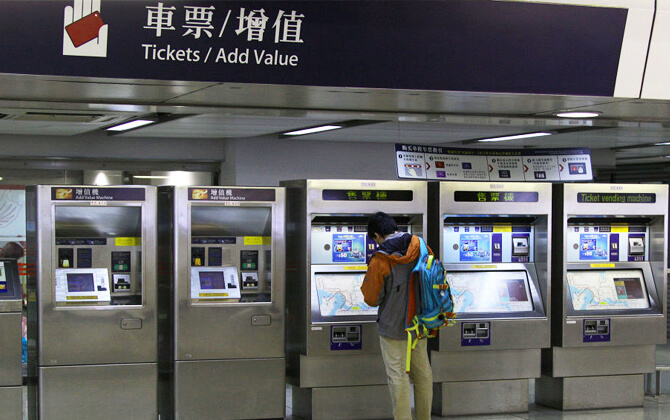
Short trips cost less, while longer cross-city journeys cost more. Single journey tickets can be bought from ticket machines at MTR stations. If you want to compare cost before travel, the Trip Planner works as a fare calculator as well.
| Key | Information |
|---|---|
| Adult | Standard fare |
| Child | Usually 50% of the adult fare |
| Student | Discounted fares on urban lines |
| Senior | Special concessionary fare |
Octopus card users usually get a small discount compared with single tickets. Contactless bank cards work at most gates, but they do not provide child or senior discounts. QR code payment is available on most heavy rail MTR lines, though not on Airport Express.
Other schemes include the Student Travel Scheme, Fare Saver, Intermodal discount, and Park and Ride Scheme. The Government Public Transport Fare Concession Scheme for the Elderly and Eligible Persons with Disabilities is also available, and its fare rules are changing from 3 April 2026.
For the latest fare, ticket price, and price details, check the MTR website, MTR Mobile app, station ticket machines, or the fare chart before you travel.
Ticket Types
The MTR offers several ticket and pass options depending on how often you travel. Regular passengers can use Octopus, QR Code, contactless bank cards, Special Edition Octopus, or China T-Union Card. For a one-off trip, single journey tickets are available.
There are also options for specific travel needs, including products for cross-boundary train services and schemes such as the Elderly and Eligible Person With Disabilities scheme, Student Travel Scheme, Fare Saver, Intermodal discount, Park and Ride Scheme, City Saver, and Monthly Pass. If you are looking for a day pass, the draft does not list one by name, but it does mention City Saver and Monthly Pass among the available fare products.
Airport Express has its own ticket types and fares for individual trips, group travel, and morning service promotions. Some Airport Express tickets can be bought online and used as QR Code tickets, while others need to be redeemed as physical tickets at designated collection centres.
The government public transport fare concession scheme for elderly passengers and eligible persons with disabilities will change from 3 April 2026. According to the update in the draft, it will move from a flat HK$2 fare to a HK$2 Flat Rate or 80 Per cent Off scheme, with final fare details still being worked out.
Connections to Other Systems
The MTR is the backbone of transportation in Hong Kong and also links the city to other transport systems. Since the 2007 merger with Kowloon-Canton Railway Corporation, it has operated as one integrated system across Hong Kong Island, Kowloon, the New Territories, and Lantau Island.
For cross-boundary travel, the East Rail Line connects to Lo Wu and Lok Ma Chau, providing rail access between Hong Kong and Shenzhen. For high-speed travel into mainland China, passengers can use the Guangzhou-Shenzhen-Hong Kong Express Rail Link from Hong Kong West Kowloon Station to Mainland stations without interchange.
The Airport Express gives the fastest rail connection to Hong Kong International Airport and AsiaWorld-Expo. In-town check-in at Kowloon and Hong Kong stations makes airport transfers more convenient, and the Airport Express extension to AsiaWorld-Expo supports event and exhibition travel.
Within the city, the railway network is supported by Light Rail and feeder bus services. These local transport links are particularly useful in areas such as Tuen Mun and Yuen Long, where bus and tramway-style Light Rail connections help passengers move between communities and stations.
Several interchange stations also support easy transfers, and some offer cross-platform interchange. Together, these links make the MTR central to city transport and wider public transport in Hong Kong.
Airport Connections
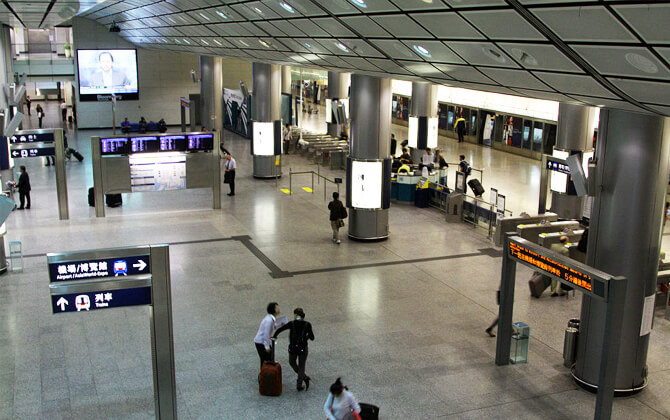
The Airport Express is the fastest path train option between Hong Kong International Airport and the city. The journey from Airport Station to Hong Kong Station takes as little as 24 minutes, making it a convenient route for travelers heading to Central.
The line also serves AsiaWorld-Expo, just a 2-minute ride from Airport Station. From AsiaWorld-Expo Station, the trip to the city center takes around 28 minutes.
All five Airport Express stations are designed to high standards. Passengers can use free MTR connections, free in-town check-in services, free in-train Wi-Fi, and complimentary in-train power charging in designated cars.
Other services mentioned in the draft include free porter service, free Airport Express shuttle bus service, free return journey for same-day return trips, and station parking.
Tickets can be booked online.
Tips and Rules
The MTR is easy to use once you know the basics. A few simple habits make the trip smoother and help keep the system safe for everyone.
- Use the correct ticket, card, or payment method for your journey. Options include Octopus, QR code tickets, contactless bank cards, and single journey tickets.
- Have your ticket ready before reaching the gate, and make sure it is validated when you enter and exit.
- Listen for the beep and check for the green light before moving through the gate.
- Follow station signs and color-coded line markings to find the right platform, route, and interchange.
- Let passengers leave the train before boarding.
- Queue behind the platform lines and wait in order.
- Stand on the right side of escalators and keep the left side clear.
- Keep bags and belongings close so you do not block doors, exits, or walkways.
- Offer priority seats to elderly passengers, people with disabilities, pregnant passengers, and anyone who needs them.
- Do not eat or drink in paid areas, including platforms and trains.
- Keep your valid ticket with you, as staff may inspect tickets at gates or on board.
- If you need help with route plan, fare, or service updates, use a Customer Service Centre, the MTR Mobile app, or the official website.
If you are traveling with luggage or a stroller, use lifts and wide gates where available. For a more comfortable ride, try off-peak hours and have your card or phone ready before you reach the fare gates.
A Brief History Metro
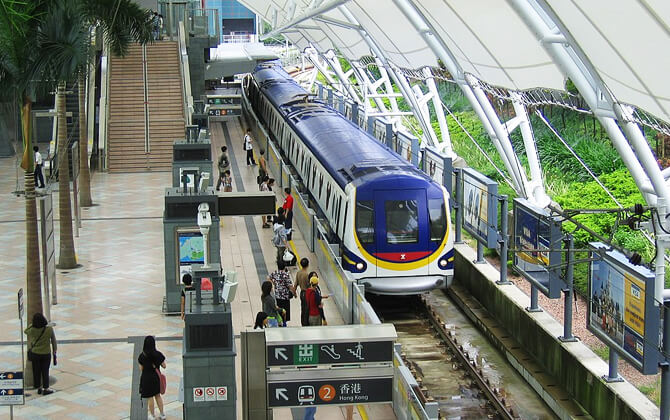
The MTR is Hong Kong’s main railway transport system and a major part of everyday life in the city. Operated by MTR Corporation, it grew from transport studies in the 1960s into a large rapid transit network serving Hong Kong Island, Kowloon, and the New Territories.
Early planning began in 1966, when British consultants were appointed to study Hong Kong’s transport needs. Their 1967 report recommended a 40-mile system, about 64.4 kilometers, with four lines. The government later revised the proposal and approved construction of the Initial System in 1972. After further changes, it became the Modified Initial System, and the Mass Transit Railway Corporation was established in 1975.
Construction started in November 1975, and the first section opened on 1 October 1979. The full Modified Initial System was completed in February 1980. Expansion then followed steadily: the Tsuen Wan line opened in 1982, the Island line in 1985 and 1986, and the Kwun Tong line was extended across Victoria Harbour in 1989.
Major growth continued in the 1990s and 2000s. The airport railway, including the Tung Chung line and Airport Express, opened in 1998. The Tseung Kwan O line began service in 2002, followed by the Disneyland Resort line in 2005 and the Airport Express extension to AsiaWorld-Expo in the same year. In 2000, the MTR became partially privatized, and in 2007 it merged operations with the Kowloon-Canton Railway network, expanding the system further.
Recent expansion has included the West Island line, the Kwun Tong line extension to Whampoa, the South Island line, phases of the Tuen Ma line, and the East Rail line extension. The Octopus card was integrated in 1997, helping make travel faster and more convenient for millions of passengers.
Future Extensions
MTR Corporation has proposed several future expansion projects to the Hong Kong Government. Some are already in planning and design, while others remain proposals without a confirmed construction timetable.
Since the 2007 rail merger, the network has expanded significantly. Committed and future railway projects have already increased coverage to more than 270 kilometers, about 167.8 miles, and 98 stations. The remaining projects could increase the system to over 540 kilometers, about 335.5 miles, and 340 stations.
Current plans
The most advanced projects in the current expansion program include the following new stations and extensions.
- Tuen Mun South extension: a 2.4-kilometer extension, about 1.5 miles, of the Tuen Ma line from Tuen Mun station to a new terminus near Tuen Mun Ferry Pier. It includes the planned A16 station and Tuen Mun South station.
- Northern Link: a proposed 26-kilometer line, about 16.2 miles, linking the Tuen Ma line with the East Rail line in the northern New Territories. It is planned in phases, with Kwu Tung station as the first step and a main line with additional stations in the second phase.
- Tung Chung line extension: an extension of about 1.3 kilometers, about 0.8 miles, to Tung Chung West, together with a new Tung Chung East station between the existing Tung Chung and the proposed Oyster Bay stations.
- Oyster Bay station: a planned infill station on the Tung Chung line, between Sunny Bay and the future Tung Chung East station.
- Hung Shui Kiu station: a planned station on the Tuen Ma line, subject to development of the Hung Shui Kiu New Town.
- Airport Railway Extended Overrun Tunnel: an approximately 500-meter extension, about 0.5 kilometers or 0.3 miles, east of Hong Kong station to improve turnaround flexibility for Tung Chung line and Airport Express trains.
Proposals
Other projects are still under study or proposal.
- Science Park/Pak Shek Kok station: a proposed infill station on the East Rail line between University and Tai Po Market.
- Tseung Kwan O line southern extension: a proposed extension southwards to Tseung Kwan O area 137.
- South Island line (West): a proposed line connecting HKU to Wong Chuk Hang via the west coast of Hong Kong Island.
- North Island line: a planned link between the Tung Chung line at Hong Kong station and the Tseung Kwan O line at North Point.
- East Kowloon line: a proposed line that has appeared in different forms over time, with no confirmed construction schedule.
- Tung Chung to Tai O light rail system: a studied light rail project on Lantau Island, with no construction timetable.
- Cable car system from Ngong Ping to Tai O: an executive study has explored this option as well.
Other long-term ideas have also been discussed in policy documents, including projects linked to the Northern Metropolis, Kau Yi Chau Artificial Island development, and other growth areas.
Nearby Attractions
The MTR gives easy access to many well-known Hong Kong attractions, especially around Wan Chai and Victoria Harbour. Nearby places mentioned in the draft include Victoria Harbour Promenade – Wan Chai Harbourfront, Central Plaza, Hong Kong Convention and Exhibition Centre, Golden Bauhinia Square, and Wan Chai.
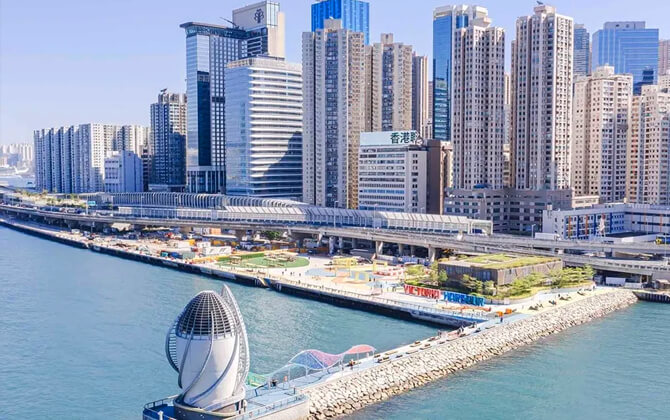
For a broader sightseeing day, the network also helps you reach Hong Kong Skyline and Victoria Harbour. It is a practical choice if you want to combine public transport with shopping, dining, events, or a waterfront walk.
- Victoria Harbour Promenade – Wan Chai Harbourfront
- Central Plaza
- Hong Kong Book Fair
- Food Expo
- Hong Kong Convention and Exhibition Centre
- Wan Chai
- Golden Bauhinia Square
- Hong Kong Skyline
- Victoria Harbour
These spots make the MTR a convenient base for exploring Hong Kong’s waterfront, event venues, and major city landmarks.