Dalian Rapid Transit, often called the Dalian Metro, is part of the wider Dalian Rail Transit system in Liaoning, China. It combines urban metro service with suburban rapid rail, while the broader network also includes historic trams and light rail. Announcements are made in Mandarin and English, and the system plays a central role in city transport and local public transport across Dalian.
| Key | Information |
|---|---|
| System | Dalian Rapid Transit / Dalian Metro, part of Dalian Rail Transit |
| Location | Dalian, Liaoning Province, China |
| Network types | Kuaigui for mainly suburban overground services; Ditie for mainly urban underground services |
| Languages | Mandarin and English announcements |
| Opened | 1 May 2003 |
| Network size | 237.74 km / 147.73 miles and 107 stations |
| Earlier track figure | About 170 km / 105.63 miles as of 1 November 2015 |
Dalian Rapid Transit Map
Map of Dalian Rapid Transit showing different lines. Click on the map to enlarge it or download the Dalian Rapid Transit map in PDF format.
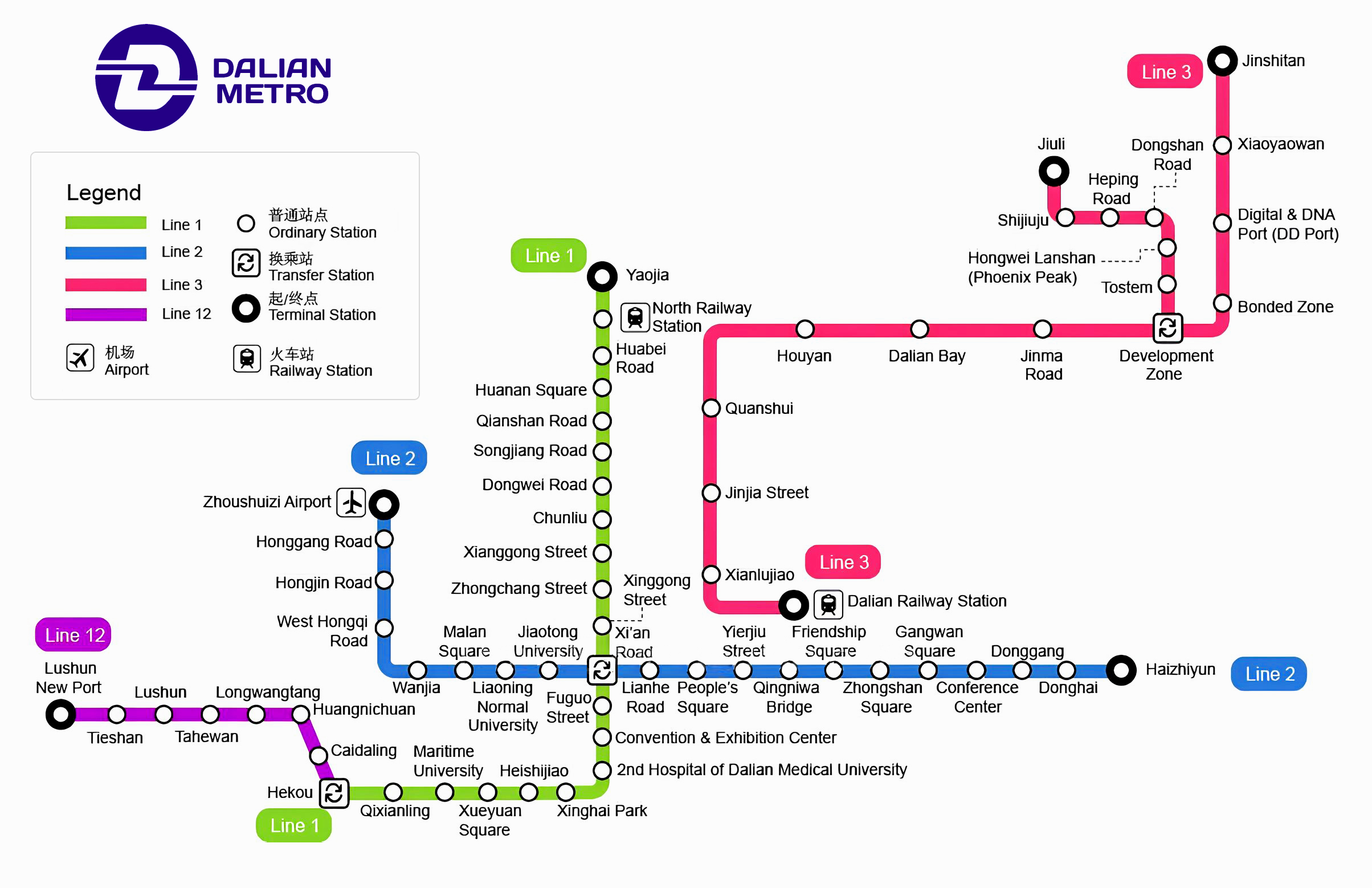
Lines and Stations
The Dalian Rapid Transit system currently has six operating lines: Line 1, Line 2, Line 3, Line 5, Line 12, and Line 13. According to the available materials, the network has 107 stations and 237.74 km / 147.73 miles of track. For anyone checking a stations map or route plan, the system covers central districts as well as suburban corridors.
| Station | Details |
|---|---|
| Line 1 | Yaojia – Hekou; opened 2015; latest extension 2017; 28.34 km / 17.61 miles; 22 stations |
| Line 2 | Dalian North Railway Station – Haizhiyun; opened 2015; latest extension 2022; 37.97 km / 23.59 miles; 29 stations |
| Line 3 | Dalian Railway Station – Golden Pebble Beach; opened 2003; latest extension 2008; 63.45 km / 39.43 miles; 18 stations |
| Line 3 branch | Dalian Development Area – Jiuli; opened 2003; latest extension 2008; 63.45 km / 39.43 miles; 18 stations |
| Line 5 | Hutan Xinqu – Houguan; opened 2023; 24.48 km / 15.21 miles; 18 stations |
| Line 12 | Hekou – Lüshun New Port; opened 2013; latest extension 2017; 40.35 km / 25.07 miles; 8 stations |
| Line 13 | Jiuli – Pulandian Zhenxing Street; opened 2021; 43.15 km / 26.81 miles; 12 stations |
| Total | 237.74 km / 147.73 miles; 107 stations |
Line 1 opened in 2015 and runs between Yaojia and Hekou. Its route is 28.34 km / 17.61 miles long with 22 stations. Key interchange points mentioned in the source include Dalian North Railway Station and Xi’an Road, both connecting with Line 2. Its line color is green.
Line 2 also opened in 2015. It links Dalian North Railway Station with Haizhiyun, follows a C-shaped route, and stretches 37.97 km / 23.59 miles across 29 stations. Xi’an Road connects with Line 1, while Qingniwaqiao connects with Line 5. Its line color is blue.
Line 3, the Jinzhou Eastern Line, was the first metro line in Dalian and opened in 2003. It connects Dalian Railway Station with Golden Pebble Beach, and a branch runs from Dalian Development Area to Jiuli. Most of the route is elevated or at grade. Its line color is magenta.
Line 5 runs from Houguan to Dalian Railway Station and then to Hutan Xinqu. The listed interchange stations are Houyan, Dalian Railway Station, and Qingniwaqiao. Its line color is red.
Line 12, also called the Tram Route 202 Extension Line, opened in 2013 and links central Dalian with Lüshunkou District. It is 40.35 km / 25.07 miles long and has 8 stations. Its line color is purple.
Line 13 Phase I runs from Jiuli to Pulandian Zhenxing Street and opened on 28 December 2021. Its line color is yellow.
Interchange Stations
These interchange stations are especially important if you are planning a route, checking the stations list, or changing between lines.
| Station | Details |
|---|---|
| Dalian North Railway Station | Served by Line 1 and connected to the northern terminal area |
| Xi’an Road | Interchange between Lines 1 and 2 |
| Hekou | Served by Lines 1, 2, and 12 |
| Airport | Served by Line 2 with direct access to Dalian Zhoushuizi International Airport |
| Dalian Railway Station | Served by Line 3 and connected to Dalian Main Railway Station |
| Houyan | Interchange on Line 5 and Line 3 |
| Qingniwaqiao | Interchange between Lines 2 and 5 |
Together, these stations tie the network together across central, eastern, western, and suburban parts of the city.
Cost Structure
Dalian Rapid Transit uses a distance-based fare system on the metro, though some lines and related rail services follow different pricing rules. On Lines 1, 2, and 12, the fare starts at CNY2 (about $0.28) and rises by distance up to CNY6 (about $0.83). The price bands given in the source are CNY2 ($0.28) for up to 6 km / 3.73 miles, CNY3 ($0.42) for 6 to 12 km / 3.73 to 7.46 miles, CNY4 ($0.55) for 12 to 18 km / 7.46 to 11.18 miles, CNY5 ($0.69) for 18 to 26 km / 11.18 to 16.16 miles, and CNY6 ($0.83) for 26 to 34 km / 16.16 to 21.13 miles.
Line 3 uses a different fare structure. Its fare also depends on distance, with a starting ticket price of CNY1 (about $0.14) and a maximum of CNY8 (about $1.11). The source also describes it as being calculated by stations traveled, with the cost increasing by station group. Line 12 is also described elsewhere in the source as following a fare system similar to Line 3, so the available materials are not fully consistent.
The Pearl Card is the main smart card for public transport in Dalian. It can be used on the city bus network and across the metro system, and it offers discounts on several lines. According to the materials, the card gives a 10% discount on Line 3 and a 20% discount on Lines 1, 2, and 12. A student card is also available with 50% savings on those three lines.
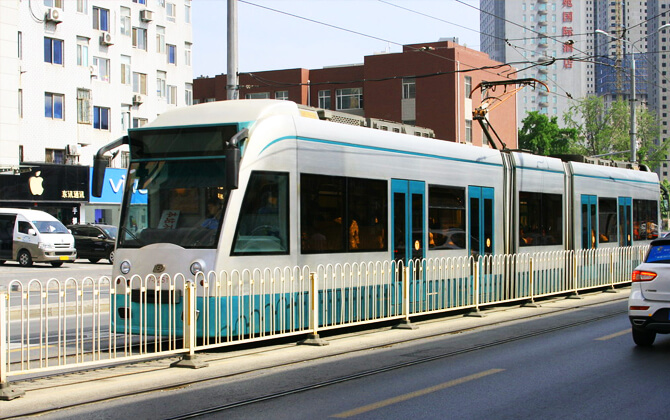
Other Dalian rail services have separate fares. The starting price for tram, light rail, and kuaigui services is CNY1 (about $0.14). Tram #201 costs CNY2 ($0.28) for the whole trip, or CNY1 ($0.14) per segment, while Tram #202 costs CNY1 ($0.14) for the full ride.
| Service detail | Timings |
|---|---|
| Lines 1, 2, 12 fare range | CNY2-CNY6 (about $0.28-$0.83), distance-based |
| Line 3 fare range | CNY1-CNY8 (about $0.14-$1.11), distance-based / station-based in source materials |
| Tram / light rail / kuaigui starting price | CNY1 (about $0.14) |
| BRT cash fare | CNY1 (about $0.14), flat fare |
| BRT smart card fare | CNY0.95 (about $0.13) |
| BRT student fare | CNY0.4 (about $0.06) |
The system uses automatic fare collection through entry and exit gates. If you are looking for fare details, ticket price information, or a rough fare calculator reference, the exact cost depends on line and distance traveled.
Tickets
Dalian Metro tickets use an embedded magnetic stripe and must be swiped at turnstiles when entering and exiting stations. Tickets are sold from vending machines in ticketing areas and from ticket offices. The machines support English, Japanese, Korean, and Russian, which makes buying a ticket easier for visitors.
Fares depend on the line and the distance traveled. On Lines 1, 2, and 12, the lowest fare starts at CNY2 (about $0.28). Across the network, the available materials give an overall fare range from CNY1.00 to CNY8.00 (about $0.14 to $1.11). Line 3 is described as using a station-based fare structure starting at CNY1 (about $0.14) for every two stations, with a maximum of CNY8 (about $1.11). Line 12 is described as following a similar fare system in the same source set.
A Pearl Card is available for regular travel, and commemorative tickets are sometimes issued for special occasions. Some of these include discounted travel or unlimited travel for one day with a one-time payment, though the source does not provide a standard day pass price.
Passengers over the age of 6 must hold a valid ticket to travel.
Card
The Pearl Card is a reloadable smart card used across Dalian public transport, including the metro and city buses. It is the most practical pass option mentioned in the source materials.
The wider Dalian rail system is split between Kuaigui, the mainly overground suburban system, and Ditie, the mainly underground urban system. Announcements are made in both Mandarin and English.
For Ditie, the starting fare is CNY2 (about $0.28), with the start mileage set at 6 km / 3.73 miles. The source also lists promotion mileage as 6, 6, 8, 8, 10, 10.
| Station | Details |
|---|---|
| Section 1 | 0-6 km / 0-3.73 miles: CNY2.00 ($0.28); Pearl Card CNY1.60 ($0.22) |
| Section 2 | 7-12 km / 4.35-7.46 miles: CNY3.00 ($0.42); Pearl Card CNY2.40 ($0.33) |
| Section 3 | 13-18 km / 8.08-11.18 miles: CNY4.00 ($0.55); Pearl Card CNY3.20 ($0.44) |
| Section 4 | 19-26 km / 11.81-16.16 miles: CNY5.00 ($0.69); Pearl Card CNY4.00 ($0.55) |
| Section 5 | 27-34 km / 16.78-21.13 miles: CNY6.00 ($0.83); Pearl Card CNY4.80 ($0.66) |
| Section 6 | 35-44 km / 21.75-27.34 miles: CNY7.00 ($0.97); Pearl Card CNY5.60 ($0.77) |
| Section 7 | 45-54 km / 27.96-33.55 miles: CNY8.00 ($1.11); Pearl Card CNY6.40 ($0.89) |
Tram and light rail fares also vary by route. Tram #201 costs CNY2 ($0.28) for the full trip or CNY1 ($0.14) per segment; with the Pearl Card, that becomes CNY1.3 ($0.18) for the full trip and CNY0.9 ($0.12) per segment. Tram #202 costs CNY1 ($0.14) for the full trip, or CNY0.95 ($0.13) with the Pearl Card.
The source also notes that Line R3 ranges from CNY1 to CNY8 (about $0.14 to $1.11), Line R2 ranges from CNY2 to CNY7 (about $0.28 to $0.97) and did not accept the Pearl Card during that period, and Lines M1 and M2 range from CNY2 to CNY6 (about $0.28 to $0.83).
Operating Hours
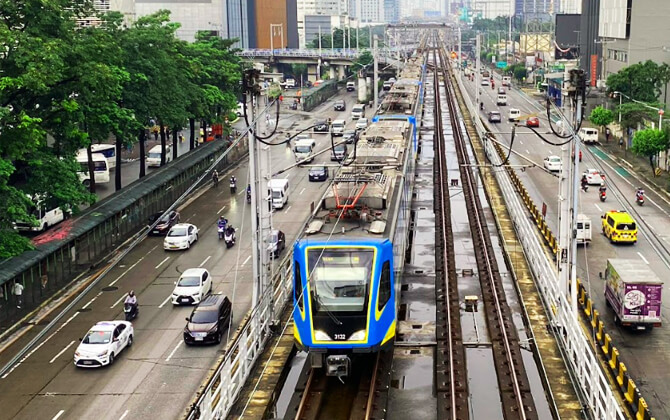
Dalian Rapid Transit runs daily from 5:30 a.m. to 10:30 p.m. If you are looking for operating hours, opening hours, opening times, working hours, or timings today, the available materials show the same daily schedule across the week, with changes only in cases such as maintenance or breakdowns.
| Service detail | Timings |
|---|---|
| Metro opening time | 5:30 a.m. |
| Metro closing time | 10:30 p.m. |
| Weekday off-peak frequency | Every 4 minutes |
| Peak frequency | Every 2 minutes |
| Weekend frequency | Generally every 4 minutes |
| Tourist Loop – Dalian Railway schedule | Daily, 8:00 a.m. to 4:00 p.m. |
| Some bus operating hours | As early as 4:30 a.m. to as late as midnight, depending on route |
The train schedule varies by time of day. On weekdays and during off-peak periods, trains usually arrive every 4 minutes. At peak times, frequency increases to every 2 minutes. On weekends, service generally runs every 4 minutes.
For late-evening trips, it is worth checking your route timetable in advance. Since the system does not operate all night, passengers traveling near closing time may need to switch to bus or other city transport options. The source materials do not give a systemwide last train time by line, only the overall daily schedule.
Interconnections with Other Systems
Dalian Rapid Transit works as part of a much wider transport network rather than as a standalone railway. Dalian Rail Transit includes trams, the Dalianren light rail, and the rapid transit system itself, split between Kuaigui and Ditie. That matters for daily transportation in Dalian, because many trips depend on transfers between metro, tramway, and bus services.
Within the rail system, several lines connect directly with one another. Line 1 interchanges with Line 2 at Dalian North Railway Station and Xi’an Road. Line 2 connects with Line 5 at Qingniwaqiao and again with Line 1 at Xi’an Road. Line 3 interchanges with Line 5 and Line 6 at Dalian Railway Station, with Line 4 and Line 5 at Jinjiajie, with Line 9 and Line 5 at Houyan, and with Line 13 at Jiuli. Line 12 connects with Line 1 at Hekou. Line 13 Phase I links Jiuli with Pulandian Zhenxing Street.
Planned lines are intended to improve these links further. The materials mention Line 4 with interchanges at Suoyuwan, Jinjia Street, Songjiang Road, Xinzhaizi, and other stations, along with other future projects designed to improve access between urban districts, suburbs, and major transport terminals.
Beyond the metro, Dalian also has buses, trolleybuses, streetcars, expressways, national highways, port services, and railway links to other cities. The Pearl Card helped unify fare payment across parts of this system, and later planning emphasized feeder bus routes, transfer hubs, and closer coordination between metro and surface transport.
Airport Connection
Dalian Metro has a direct airport link through Airport Station on Line 2, giving travelers a simple path train-style connection to Dalian Zhoushuizi International Airport.
The station has three exits leading toward the airport terminal area. Exit A gives access to the newly inaugurated terminal building and also connects to Terminal D. Exit B leads to Terminal C of the new building, which is under construction according to the source materials.
Running time to the airport depends on where you start, and the fare ranges from CNY2 (about $0.28) for nearby trips to CNY4 or CNY5 (about $0.55 or $0.69) for longer journeys. For many passengers, the metro is the cheapest and fastest option, though travelers with heavy luggage may prefer other transport choices.
Bus stops outside the airport connect with other parts of Dalian and nearby cities not served directly by the metro. Taxi and car rental services are also available near the terminal.
Rules & Regulations
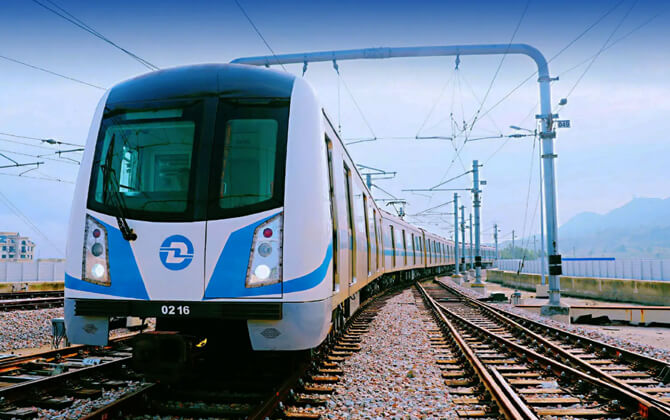
Dalian Metro has station and onboard rules designed to keep the system safe, orderly, and comfortable for everyone.
- Make sure luggage does not inconvenience other passengers or block traffic flow.
- Treat metro staff and fellow passengers courteously.
- All passengers over the age of 6 must have a valid ticket.
- Fireworks are prohibited on metro vehicles.
- Smoking is strictly prohibited in all metro facilities.
- Do not run in stations; walk at a moderate pace to avoid accidents.
- Alcohol consumption on metro vehicles, or entering while intoxicated, is prohibited.
- Do not lean against the doors separating the platform from the tracks.
- Do not board or exit once the door-closing announcement has been made.
- In an emergency, stay calm and follow security staff instructions.
- Use media devices with headphones inside carriages.
- Do not obstruct the work of metro staff.
- Begging is not allowed in areas owned by Dalian Metro.
- Firearms may only be carried by properly identified police officers.
- Filming or recording inside the metro requires permission from local authorities.
- Passengers with prams should sit at the front or rear of the train.
The network is not automated and does not run 24 hours a day. Daily service operates from 5:30 a.m. to 10:30 p.m.
Tickets are checked through entry and exit gates, and fares vary by distance. The lowest metro fare starts at CNY2 (about $0.28) on Lines 1 and 2.
Interesting Facts
- Dalian Rail Transit includes trams, the Dalianren light rail, and the Dalian Rapid Transit system, divided into Kuaigui and Ditie.
- Announcements on the system are made in both Mandarin and English.
- As of 1 November 2015, the network had about 170 km / 105.63 miles of track.
- The Dalian Metro opened on 1 May 2003.
- Dalian trams have operated continuously since 1909, making them one of the oldest tram systems still in use in China.
- In 2017, the metro became the first system in China to provide information in languages other than English and Mandarin.
- Two companies operate different parts of the system: Dalian Metro Co. runs Lines 1 and 2, while Dalian Public Transportation Group Co. runs Lines 3 and 12.
- Xi’an Road station on Lines 1 and 2 has a maternity room.
- All Dalian Metro stations have public toilets.
- Airport Station on Line 2 provides direct airport access.
History
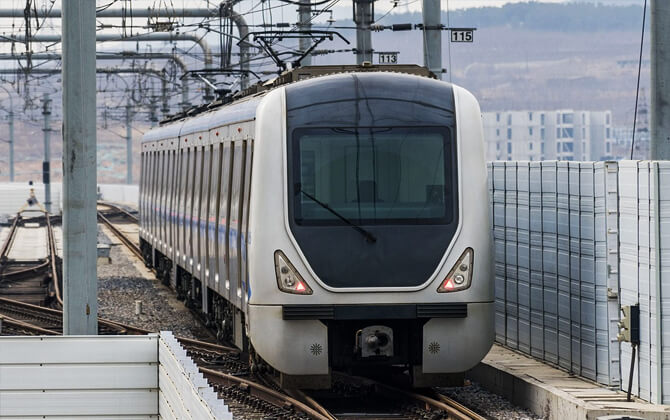
Dalian Rapid Transit began with Line 3. It first entered trial operation on 8 November 2002 between Xianglujiao and Jinshitan. The Xianglujiao-Jinshitan section opened on 1 May 2003, followed by the Xianglujiao-Dalian extension on 29 September 2004.
The system then expanded in stages. On 18 December 2006, Line 3 was extended to Xiaoyaowan. A branch line from Kaifaqu to Jiuli began trial operation on 7 July 2008 and opened on 28 December 2008. Later growth included the opening of No. 202 between Caidaling and Lüshunxingang on 1 May 2014, the start of trial operation on Line 2 between Huiyizhongxin and Jichang on 40 April 2015, and the opening of that line on 22 May 2015. Line 1 opened its first section from Yaojia to Fuguojie on 30 October 2015.
By 1 November 2015, Dalian Rapid Transit had about 170 km / 105.63 miles of track. The network includes both the suburban Kuaigui system and the urban Ditie system, with bilingual announcements in Mandarin and English.
Future Expansions
Dalian Metro expansion plans focus on both extensions to existing lines and entirely new routes. One project named in the source is the northern extension of Line 1, planned to connect the line with the new airport in northern Dalian. The extension is listed as 13.2 km / 8.20 miles long and is intended to improve access for residents of Yaojia.
Another major project is Line 7, a planned 16.5 km / 10.25 miles line with 17 stations. It is expected to serve the Lily Mountain Villa area and cross several mountainous sections. Line 10 is also listed as a future line. It will run 22.8 km / 14.17 miles through Jinpu district and is described as the first project to provide a metro link for residents of southern Dalian. Public plans say Line 10 will intersect with Lines 1 and 2, creating a third connection at Xi’an Road Station.
The expansion program also includes Line 4, shown as a 2027 project from Yingchengzi to Suoyuwan. Phase 1 is planned to be 23.01 km / 14.30 miles long with 17 stations, including interchange points with Lines 5, 3, 1, and 2. Other planned items mentioned in the materials include Line 1 Phase III from Yaojia to Dalian New Airport, Line 13 Phase II from Dalian North Railway Station to Jiuli, Line 11, and longer-term routes such as Lines 6, 7, 8, 9, 10, 11, and 14 through 20.
The wider route plan is meant to reduce fragmentation, improve coverage, and strengthen integration across the transport system. The materials note that better system integration and new rail corridors could increase the share of public transport in the city.
Tourist Attractions
Dalian combines coastal scenery, urban landmarks, and family attractions that are fairly easy to reach by public transport. If you are planning sightseeing, the metro can help you move between several of the city’s best-known places without much fuss.
Top Places to Visit
- Xinghai Square — One of Asia’s largest city squares, known for sea views, evening lights, and waterfront walks.
- Russian Style Street — A pleasant street lined with Russian-style buildings, popular for photos and a relaxed stroll.
- Zhongshan Square — A central square surrounded by historic Western-style buildings and radial streets.
- Laohutan Ocean Park — A large ocean-themed attraction with aquariums, shows, and seaside views.
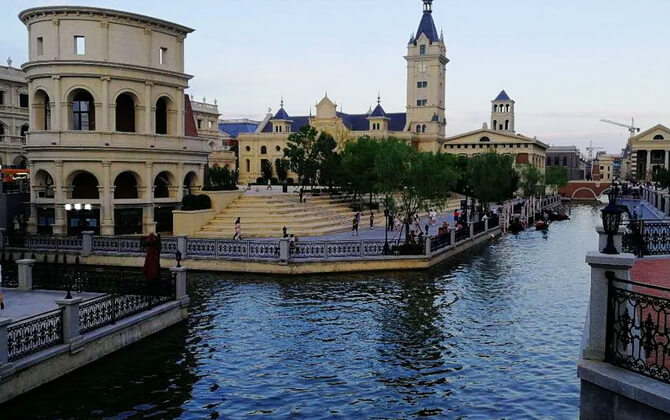
- Dongfang Venice Water City — A canal-style area known for gondola rides and attractive night scenery.
- Dalian Forest Zoo — A family-friendly stop with a large animal collection in a forest setting.
- Jinshitan — A seaside resort area known for coastal scenery and geology.
- Dahei Mountain — A scenic mountain area with popular climbing routes and viewpoints.
Metro-Friendly Sightseeing
Dalian’s metro makes it easier to reach several major attractions. Xinghai Square, Russian Style Street, and Dalian North Station are among the key stops mentioned in transit guidance, while the airport is directly connected by Line 2. For visitors trying to cover a lot in one day, that is a real advantage.
A simple sightseeing route could start at Zhongshan Square or Xinghai Square and continue to nearby attractions such as Russian Style Street or Laohutan Ocean Park. For a slower evening outing, Dongfang Venice Water City is especially appealing.
Best Time for Sightseeing
Season makes a noticeable difference in Dalian. Summer is the busiest period and works well for beaches, swimming, and water sports. Fall is often seen as a local favorite thanks to clear weather, seafood, and attractive city scenery. Winter is quieter and can be more budget-friendly, with hot springs and ski options outside the city center.
During the day, early morning and evening are often the most pleasant times to explore. Sunrise at Xinghai Square can be calm and uncrowded, while night visits to Donggang and Xinghai Square are popular for their lights and atmosphere.
Practical Tip
Some attractions pair better with metro travel than others. Use the metro for major city sights, allow extra time during peak commuting periods, and try to focus on one area at a time if you are visiting several places in a single day.