The Nanjing Metro is the rapid transit system serving Nanjing, the capital of Jiangsu Province, China. Operated by Nanjing Metro Group Company, it connects urban districts, suburban areas, the airport, high-speed rail hubs, and selected neighboring cities. The system opened in 2005 and has grown into a major part of local transport and city transport, with 14 lines, 243 stations, and 571.49 km (355.11 mi) of track.
| Key | Information |
|---|---|
| System type | Rapid transit / metro system |
| Operator | Nanjing Metro Group Company |
| Opening year | 2005 |
| Lines | 14 |
| Stations | 243 |
| Network length | 571.49 km (355.11 mi) |
| Coverage | Urban districts, suburban districts, airport links, and some intercity connections |
| Role in transport | Core part of public transport in Nanjing |
Nanjing Metro Map
Map of Nanjing Metro showing different lines. Click on the map to enlarge it or download the Nanjing Metro map in PDF format.
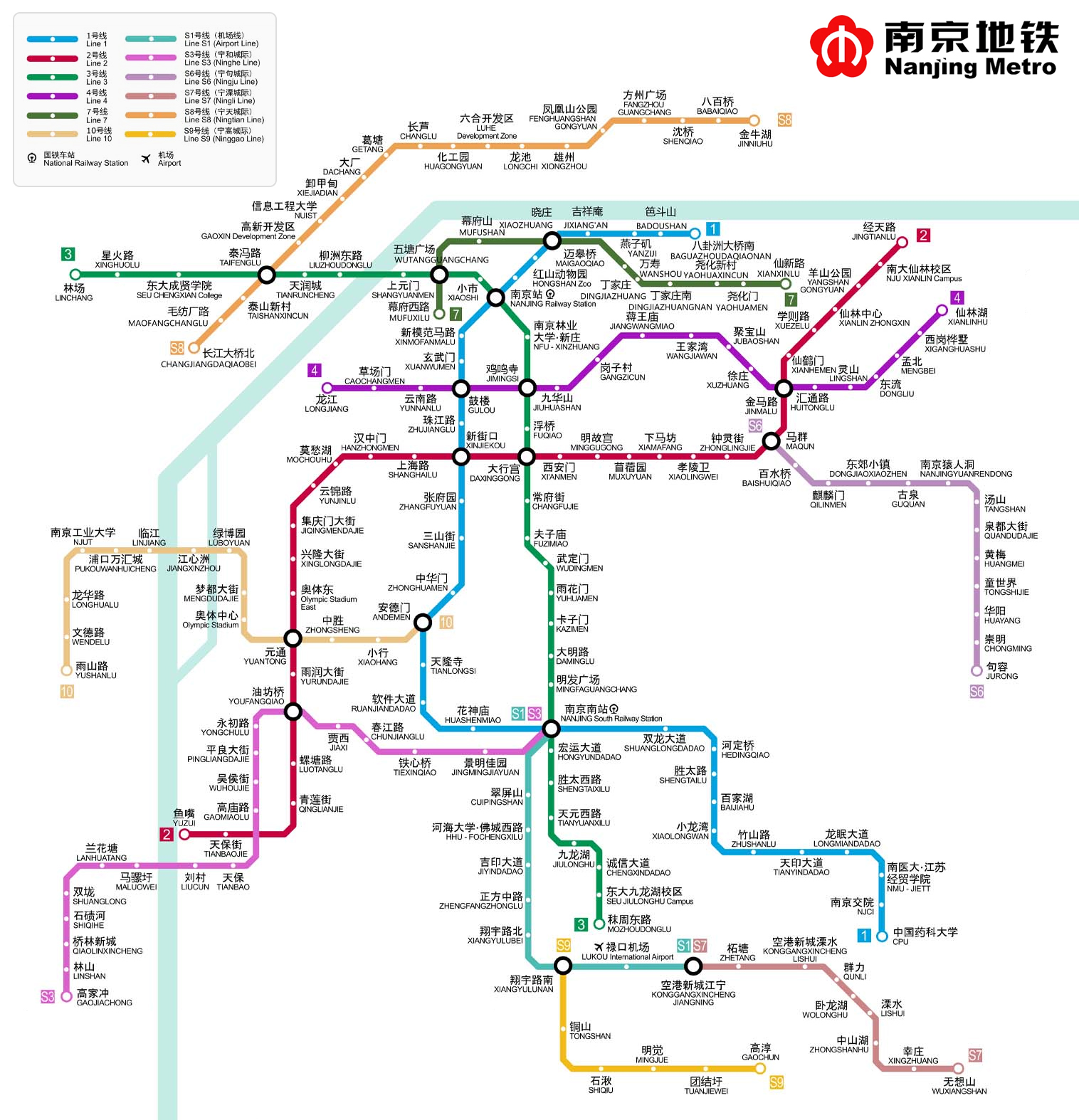
Nanjing Metro Lines and Stations
The Nanjing Metro route network combines urban lines and suburban S-lines. Major transfer stations include Nanjing Railway Station, Nanjing South Railway Station, and Xinjiekou, while other important interchange points include Andemen, Youfangqiao, and Taifenglu. The system also links with the airport, high-speed rail, tramway services, and nearby cities on selected routes.
If you are looking for a stations map or a stations list, the table below gives a clear overview of the lines currently in operation.
| Station | Details |
|---|---|
| Line 1 | Baguazhoudaqiaonan – CPU; opened 3 September 2005; newest extension 28 December 2022; 45.4 km (28.2 mi); 32 stations |
| Line 2 | Yuzui – Jingtianlu; opened 28 May 2010; newest extension 28 December 2021; 43.6 km (27.1 mi); 30 stations |
| Line 3 | Linchang – Moling; opened 1 April 2015; newest extension 19 December 2025; 48.2 km (30.0 mi); 31 stations |
| Line 4 | Longjiang – Xianlinhu; opened 18 January 2017; no newer extension listed; 33.8 km (21.0 mi); 18 stations |
| Line 5 | Jiyindadao – Fangjiaying; opened 31 March 2024; newest extension 6 August 2025; 36.9 km (22.9 mi); 30 stations |
| Line 7 | Xianxinlu – Xishanqiao; opened 28 December 2022; newest extension 28 December 2024; 35.7 km (22.2 mi); 27 stations |
| Line 10 | Dongqilu – Yushanlu; opened 1 July 2014; newest extension 19 December 2025; 34.9 km (21.7 mi); 24 stations |
| Line S1 | Nanjing South Railway Station – Konggangxinchengjiangning; opened 1 July 2014; newest extension 26 May 2018; 36.3 km (22.6 mi); 9 stations; airport express path train route |
| Line S3 | Nanjing South Railway Station – Gaojiachong; opened 6 December 2017; no newer extension listed; 36.3 km (22.6 mi); 19 stations |
| Line S4 | Chahe – Chuzhou Railway Station; opened 28 June 2023; no newer extension listed; 46.2 km (28.7 mi); 10 stations |
| Line S6 | Maqun – Jurong; opened 28 December 2021; no newer extension listed; 43.6 km (27.1 mi); 13 stations |
| Line S7 | Konggangxinchengjiangning – Wuxiangshan; opened 26 May 2018; no newer extension listed; 28.8 km (17.9 mi); 9 stations |
| Line S8 | Changjiangdaqiaobei – Jinniuhu; opened 1 August 2014; newest extension 30 September 2022; 47.3 km (29.4 mi); 19 stations |
| Line S9 | Xiangyulunan – Gaochun; opened 30 December 2017; no newer extension listed; 52.4 km (32.6 mi); 6 stations |
| Total network | 571.5 km (355.1 mi); 243 stations |
Line 1 was the first route in operation and became the north-south backbone of the system. Line 2 mainly runs east-west. Line 3 started service in 2015, Line 4 in 2017, Line 5 in 2024, and Line 7 opened in stages from 2022 to 2024. Line 10 began operating in 2014 after the Olympic Stadium branch of Line 1 was reassigned.
The suburban S-lines extend the route plan beyond the city core. S1 serves the airport, S4 connects Nanjing with Chuzhou, and S6 reaches Jurong. Together, these lines support transportation in Nanjing well beyond the center.
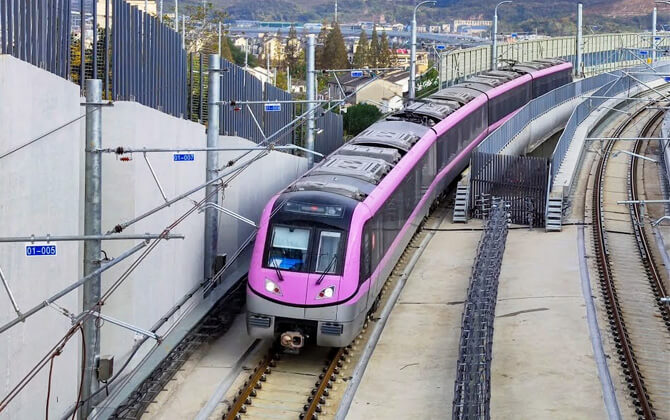
Nanjing Metro Timetable
Nanjing Metro operating hours vary by line, direction, station, and day. In general, the system runs from about 6 am to 11 pm, but exact opening hours, opening times, working hours, and closing time depend on the route you use. For many trips, the first train, last train, and timings today can differ by station, so checking the timetable before travel is a smart move.
The available timetable information in the source includes Line 2, Line 3, and selected station-specific timings for Xinjiekou. It also notes that separate train schedule details may apply on weekdays, Fridays, Saturdays, Sundays, and holidays.
| Service detail | Timings |
|---|---|
| General system operating hours | About 6 am to 11 pm |
| Line 2 route timetable | First and last train times listed by station in both directions between Yuzui and Jingtian Road |
| Line 3 timetable | Station-by-station operating times between Linchang and Mozhoudonglu |
| Xinjiekou station schedule | Separate first and last train timings for Line 1 and Line 2 on weekdays, Friday, Saturday, and Sunday |
Since April 1, 2025, the metro has also offered a 1-day pass for ¥20 (about $2.76) and a 3-day pass for ¥45 (about $6.21). Both passes allow unlimited rides during the selected period and are sold at selected stations near tourist areas, CBDs, and major transport hubs.
Because starting time and last train details can change by direction, station, and service day, always check the latest schedule today if you are traveling early, late, or making a connection.
Frequency
Train frequency depends on the line and the time of day. Line 1 runs about every 3 minutes on the main section between Maigaoqiao and Andemen, and every 6 minutes on its branches. Line 2 and Line 10 usually run every 6 to 8 minutes. Line S1 runs every 10 minutes, while Line S8 runs every 14 to 29 minutes.
Frequency can also vary within the same route, so running time and waiting time are not always identical across the network.
Ticketing and Fares
Nanjing Metro uses a distance-based fare system. The ticket price starts at ¥2 (about $0.28) for the first 10 km (6.2 mi). It then rises by distance: ¥3 (about $0.41) for 10 to 16 km (6.2 to 9.9 mi), ¥4 (about $0.55) for 16 to 22 km (9.9 to 13.7 mi), ¥5 (about $0.69) for 22 to 30 km (13.7 to 18.6 mi), ¥6 (about $0.83) for 30 to 38 km (18.6 to 23.6 mi), ¥7 (about $0.97) for 38 to 48 km (23.6 to 29.8 mi), ¥8 (about $1.10) for 48 to 58 km (29.8 to 36.0 mi), and ¥9 (about $1.24) for 58 to 70 km (36.0 to 43.5 mi). For trips over 70 km (43.5 mi), the cost increases by another ¥1, about $0.14, for roughly every 14 km (8.7 mi).
Some lines are listed with fixed fare amounts for the full journey: Line 1 costs ¥6 (about $0.83), Line 2 ¥6 (about $0.83), Line 3 ¥7 (about $0.97), Line 10 ¥4 (about $0.55), S1 ¥4 (about $0.55), S3 ¥6 (about $0.83), and S8 ¥7 (about $0.97).
Children under 4 ft (1.3 m) ride free on all metro lines.
- Single-journey ticket options are available from ticket vending machines and ticket windows.
- The Nanjing Public Utility IC Card, also called Jinlingtong, gives a 5% fare discount.
- Alipay can be used to pay the fare, though no discount applies.
Ticket machines accept coins, ¥5 and ¥10 banknotes, and Alipay. The Jinlingtong card costs ¥25 (about $3.45) as a refundable fee and can be recharged at metro ticket booths and many convenience stores. It can also be used on other public transport, including bus services and taxis. An NFC version is available free through the iPhone Wallet app.
For visitors making several trips in one day, a day pass may be more convenient than buying individual tickets. If you need a fare calculator, the source does not provide one, but the fare bands above give the basic price structure.
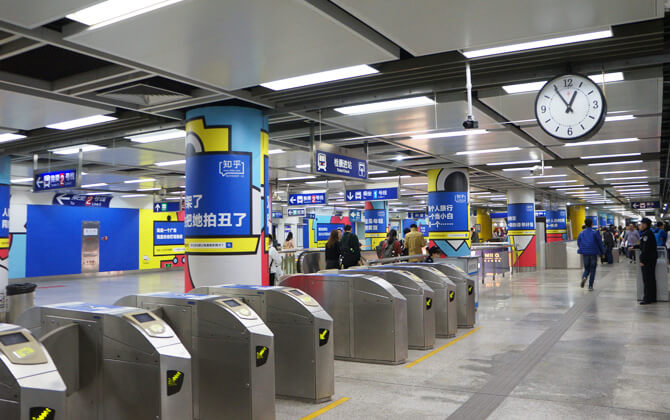
Parking
Some stations offer station parking and park-and-ride facilities, and there are parking lots at certain metro stations. The source does not give a full stations list for parking or any parking charges, parking charges per day, or exact parking cost details.
The system card can be used for discounts on metro fares, city buses, attractions, supermarkets, parking, and shopping centers.
Pets are not allowed on the metro except for guide dogs accompanying visually impaired passengers. Bicycles, whether folded or unfolded, are also not allowed.
Regulations and Tips
The Nanjing Metro is a convenient way to get around, but riders are expected to follow the rules. You need a valid ticket to enter and exit, and the same ticket should be used throughout the paid area. If entry or exit is not completed correctly, extra payment may be required before you can leave.
Food rules are worth noting. Drinking water and milk tea is allowed under newer rules, but eating is still not permitted except for infants, young children, and patients. It is also important not to spill liquids inside the cars.
When boarding, let passengers get off first and avoid rushing the doors. Priority seating should be given to elderly passengers, people with disabilities, pregnant riders, and others who need it. Waiting in line makes the system smoother for everyone.
For safe travel, stay clear of closing doors, watch the gap between the train and platform, and avoid blocking doorways while looking at your phone. The metro also encourages people to use stairs instead of crowding escalators.
Keep an eye on bags and personal items, especially when trains are busy. Following staff instructions helps, and placing bags on the floor can create more space and may reduce the risk of pickpocketing.
Other prohibited behavior includes smoking, vandalism, unauthorized distribution of printed materials, and anything that interferes with safe operation. These rules help keep the transport system safe and comfortable.
Interesting Facts
Siemens was contracted to develop the signalling system for Lines 1 and 2, and for Line 2 it worked with the Nanjing Research Institute of Electronic Technology.
The seat color inside the metro matches the color of the line where the trains are used.
Construction started with Line 1, whose first section received final approval in 1999 and opened in 2005 with 16 stations.
On May 28, 2010, Line 1, Line 2, and the south extension of Line 1 opened on the same day. That raised the operating mileage to 84.75 km (52.66 mi) and marked the beginning of networked operations.
When Line 9 opened on December 30, 2017, Nanjing became the first city in mainland China where every district was accessible by metro.
Line S6 was the first line in the system to reach another city, connecting suburban Nanjing with Jurong.
The system also includes an airport express route: Line S1 links Nanjing South Railway Station with Lukou International Airport.
History
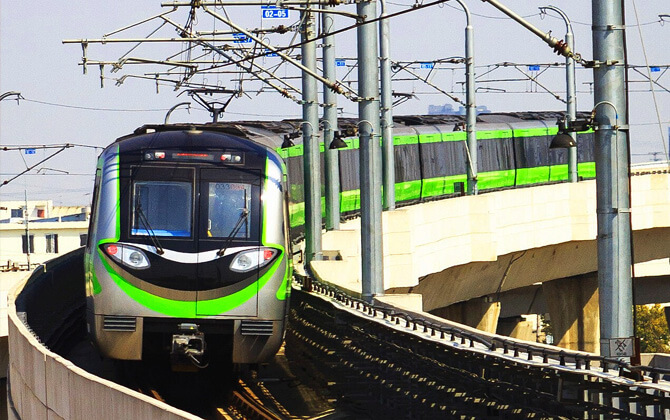
Early proposals
Plans for a metro system in Nanjing first appeared in 1984. In 1986, the Nanjing Integrated Transport Planning group was set up to study how a subway could be built, and later that year it published the Nanjing Metro Initial Phase.
The early concept included a north-south line, an east-west line, and a diagonal line meeting in the city center. A 1993 revision of the city master plan added another urban line, three light metro lines for suburban areas in Pukou and the proposed new airport, and a suburban railway to Longtan. In 1999, planning expanded again to six subway lines, two subway extensions, and three light metro lines.
In 1994, the State Planning Commission approved preparatory work, but the full plan was postponed in 1995 during a national pause on new metro projects. In 2003, Nanjing Urban Rail Transit Network Planning was revised into a 13-line master plan with nine subway lines and four light metro lines. It kept Lines 1, 2, and 3, and introduced Line 6 as a loop line.
The 2003 route plan set out staged development. The first phase aimed to complete Lines 1 and 2 by 2010 to form a basic cross-shaped network. By 2020, Lines 1, 2, 3, and 4 were intended to create a stronger pound-shaped system, with a later loop line linking the full network. The plan also identified four subway lines crossing the Yangtze River.
First line
The first section of Line 1, from Maigaoqiao to Xiaohang, received final approval in 1999. Construction resumed in May 2000, and the full Line 1 project entered construction in December that year. A western extension from Xiaohang to a newly built stadium was accelerated after Nanjing won the right to host the National Games.
Line 1 began trial operations on September 3, 2005, running from Maigaoqiao to Olympic Stadium with 16 stations over 21.72 km (13.50 mi). Its launch made Nanjing the sixth city in mainland China to open a metro system.
The formation of the metro network
Line 2 grew from the original east-west concept and was designed to connect eastern Xianlin with western Hexi, originally with a Yangtze crossing. Construction of Olympic Stadium East station began in December 2003, followed by Xinglongdajie in December 2005. By mid-2006, all 19 stations in phase I were officially under construction across 25.27 km (15.70 mi).
The east extension of Line 2 was approved in October 2007, first adding five stations from Maqun to Yangshangongyuan, with two later added to Jingtianlu. Geological problems and an accident during construction of Jingqingmendajie station led to the cancellation of the original cross-river plan for Line 2 and the proposed Line 6 ring line. After that, Line 2 was rerouted south to Youfangqiao, a change that strongly influenced later development of the system.
On May 28, 2010, Line 2 and the south extension of Line 1 opened together. This increased total operating mileage to 84.75 km (52.66 mi) and created a cross-shaped network framework. The south extension of Line 1 also formed a Y-shaped branch with the original route.
Later expansion continued with more lines and extensions. Line 4 entered operation on January 18, 2017. Line S1 opened its first phase on July 1, 2014, in time for the Nanjing 2014 Summer Youth Olympics, and its second phase later became Line S9. Line S6 opened on December 28, 2021, becoming the first line to reach another city. Line S9 opened on December 30, 2017, making every district of Nanjing accessible by metro.
The source also mentions future expansion, with several projects under construction or awaiting approval.
Future Extensions
The next near-term expansion is scheduled for December 19, 2025, when Line 3 Phase 3 and Line 10 Phase 2 are expected to begin initial operations. According to the source, the network’s operational mileage across 13 lines will increase from 508 km (315.7 mi) to 525 km (326.2 mi), including Jurong mileage, and the total number of stations will rise from 255 to 267.
Line 3 Phase 3
Line 3 Phase 3 is a 3.3 km (2.1 mi) extension with 2 underground stations: Shangqinhuaixi and Moling. It is intended to connect Nanjing Zijinshan Science City and fill a rail transit gap in the southern core area of Jiangning.
Line 10 Phase 2
Line 10 Phase 2 runs between Andemen Station in the west and Dongqilu Station in the east. The project is 13.3 km (8.3 mi) long and includes 10 underground stations: Gongqingtuanlu, Yuhuatai, Kazimen, Jichangpaodaojiuzhi, Dajiaochang, Chentiandadao, Gaoqiaomen, Yangzhuang, Shiyanglu, and Dongqilu. Transfers are planned at Kazimen to Line 3, at Dajiaochang to Line 5, and at Shiyanglu to the Qilin Tram.
This expansion continues the gradual growth of the metro and strengthens links across key urban areas.
Nearby Attractions
Nanjing Metro is a practical choice for reaching many of the city’s best-known sights without relying entirely on taxis. For visitors using public transport, Lines 1, 2, and 3 are especially useful because they connect several major landmarks and busy commercial districts.
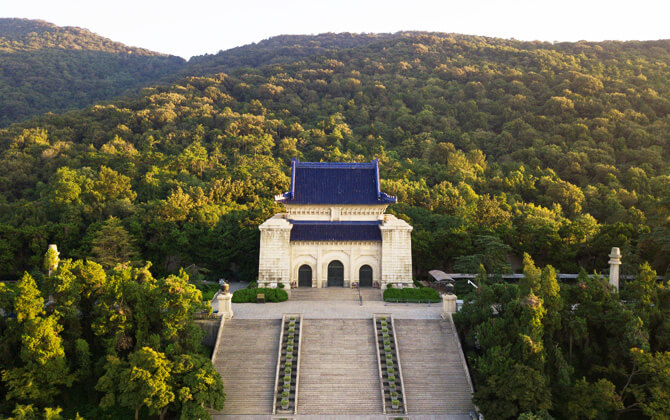
- Sun Yat-sen Mausoleum — accessible via Line 2.
- Confucius Temple — reachable by Line 1 or Line 3.
- Presidential Palace — connected by Line 2 and Line 3.
- Nanjing Museum — served by Line 1.
- Xuanwu Lake Park — accessible by Line 1 and Line 2.
- Zhonghua Gate — reached by Line 1.
- Xinjiekou — on Line 1 and Line 2, convenient for shopping and dining.
- Mochou Lake — served by Line 2.
- Jiming Temple — accessible by Line 3 and Line 4.
- Niushoushan Forest Park — reached through the metro network with additional transport.
- Hongshan Zoo — near Line 1, a handy stop for families.
For many trips around the city, these routes make the metro one of the easiest ways to move between cultural sites, shopping areas, and everyday transport hubs.